


Large plastic drums, thick-walled pipes, and broken pallets are difficult to handle in their original size. They occupy storage space, complicate material transfer, and may be too large for conventional plastic granulators.
The IVIMA Double-Shaft Plastic Shredder is designed to reduce these bulky materials into smaller pieces before further recycling. Two counter-rotating shafts use interlocking cutting blades to grip, tear, and shear plastic waste as it enters the cutting chamber.
Unlike high-speed granulators, the double-shaft design works at relatively low rotational speeds with high torque. This makes it suitable for initial size reduction of thick, rigid, and irregularly shaped plastic scrap. The machine features a heavy-duty frame, replaceable cutting blades, gearbox transmission, and a PLC control system with automatic reverse protection during overload conditions.
Six VDS models are available, with nominal processing capacities ranging from 300 to 3,000 kg/h. Machine configuration and production capacity can be customized according to material characteristics and recycling requirements.
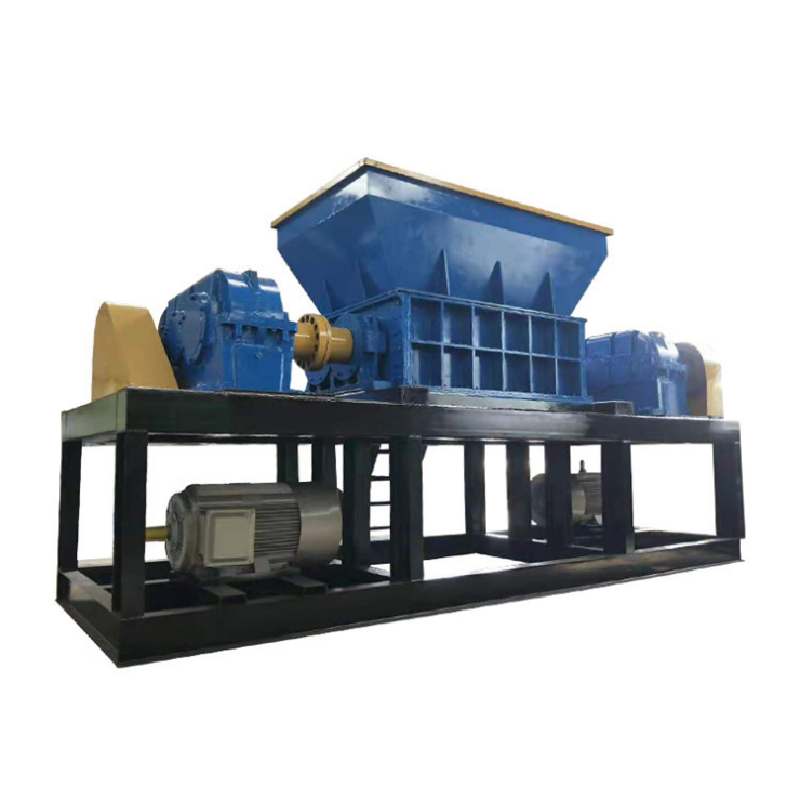
The double-shaft plastic shredder is primarily intended for bulky and rigid plastic waste. Its cutting mechanism is suitable for materials that need strong gripping and tearing action rather than fine grinding in a single step.
Material thickness, hardness, shape, and contamination affect shredding performance. The machine should be selected according to the actual waste stream rather than the general name of the plastic alone.
Industrial plastic drums, storage containers, and discarded plastic bins are common materials for double-shaft shredding. Many of these products have thick walls or hollow structures that make them difficult to feed into smaller crushing equipment. The counter-rotating blades grip the material and gradually pull it into the cutting chamber.
The resulting pieces are easier to collect and transport for subsequent recycling. Containers must be emptied and checked for hazardous residues before shredding. Their original contents should be considered when planning material preparation.
Rigid plastic pipes, pipe offcuts, and extrusion profiles can be processed using a suitable shredder configuration.
Long pipes and thick-wall sections may be difficult to handle without preliminary size reduction. The dual-shaft cutting system applies tearing and shearing forces to break them into more manageable pieces.
The required cutting capacity depends on pipe diameter, wall thickness, polymer type, and feeding arrangement. For especially long or large-diameter pipes, the feeding opening and cutting chamber dimensions should be considered during machine selection.
Damaged plastic pallets, industrial crates, and rigid storage boxes are suitable applications for heavy-duty shredding. These products often have reinforced ribs, thick corners, and complex molded structures. Their irregular shapes can make feeding and cutting difficult in conventional granulators.
The double-shaft arrangement helps grip and break these components into smaller sections. Plastic pallets and crates should be inspected for embedded metal parts or other foreign materials before processing.
Factories producing molded or extruded plastic products may generate rejected parts, oversized offcuts, and other rigid scrap. Examples include thick plastic blocks, rejected containers, and large injection-molded components.
The double-shaft shredder can reduce these materials into smaller pieces before further size reduction or material recovery. Actual suitability depends on the material composition, shape, thickness, and required final particle size.
Plastic recycling facilities may receive different types of industrial plastic waste in the same collection stream. A double-shaft shredder can be used for preliminary size reduction of suitable rigid plastic materials with different shapes and sizes.
However, shredding does not separate incompatible polymers or remove contamination. Materials intended for high-quality recycling should be sorted according to polymer type and processing requirements. Foreign materials, hazardous substances, and unsuitable components should be removed before feeding.
The two-shaft cutting system provides the gripping and shearing action required for bulky plastic waste. The interlocking blade arrangement draws material into the cutting chamber rather than relying entirely on gravity feeding. This helps the shredder handle thick plastic sections, irregular molded products, and hollow containers.
The low-speed cutting design is intended for applications requiring controlled force rather than high-speed impact. This operating approach supports the processing of rigid plastic products while limiting unnecessary material movement inside the chamber. It can also help reduce dust and noise compared with higher-speed size-reduction processes under comparable conditions.
Interlocking blades are arranged along the two rotating shafts to grip, tear, and shear incoming materials. Their cutting action is important for reducing hollow containers, thick plastic components, and irregularly shaped scrap. Blade condition directly affects shredding performance. Worn or damaged cutting edges may increase processing resistance and reduce cutting consistency.
The machine uses replaceable cutting blades to simplify maintenance and support long-term operation. Blades are wear components, particularly when processing contaminated or abrasive material. Regular inspection and timely replacement help maintain effective cutting performance and reduce avoidable machine downtime.
| Name | Size | Downloads | Update | Thumbnail | Copy Link | Download |
|---|---|---|---|---|---|---|
| PLASTIC RECYCLING 2024-IVIMA.pdf | 10.74MB | 735 | 2024-12-30 |  | Copy Link | Download |
| PLASTIC EXTRUSION 2024- IVIMA.pdf | 12.30MB | 686 | 2024-12-30 |  | Copy Link | Download |


