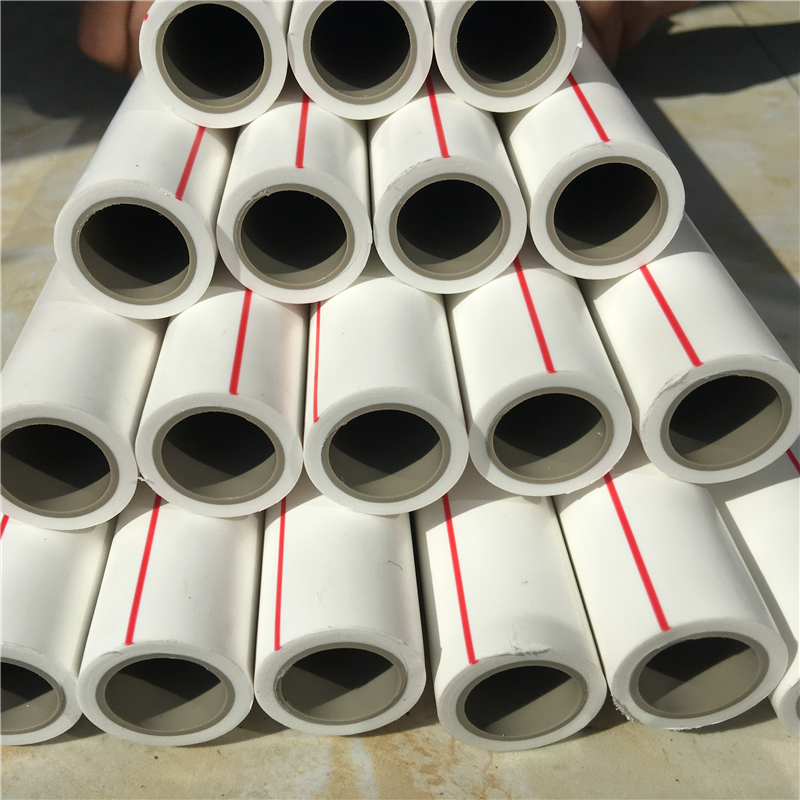
During PVC pipe extrusion start-up, the pipe leaving the extrusion die is still hot and mechanically weak. A traction pipe acts as a temporary guide that connects the newly extruded pipe to the haul-off unit. This method helps the pipe move through calibration and cooling equipment until stable production conditions are reached.
PVC Window Extrusion has become a cornerstone manufacturing method in the modern construction and building materials industry.
The global demand for durable infrastructure has pushed the HDPE Pipe Extrusion Line to the forefront of industrial manufacturing.
The flooring industry has undergone a radical transformation over the last decade, and at the heart of this revolution lies Stone Plastic Composite (SPC) technology.
When you're planning a plumbing or irrigation project, Schedule 40 PVC is usually the first material that comes to mind. It's affordable, easy to find, and simple to install.
The global demand for durable, cost-effective construction materials has placed PVC profile extrusion lines at the heart of modern manufacturing.
Corrugated plastic pipe manufacturing involves extrusion melt flow control, vacuum corrugation forming, thermal cooling stabilization, and multilayer interface bonding. Production defects usually originate from instability in these stages. This article analyzes the engineering mechanisms behind common defects and clarifies how process conditions and material variability influence pipe geometry and structural reliability.
This article frames plastic recycling as a coupled engineering system defined by input quality, sorting fidelity, material compatibility, process leakage, and policy constraints. It establishes a decision-oriented framework to distinguish which limitations can be addressed at the facility level and which require material redesign or regulatory alignment.
Global infrastructure expansion is accelerating demand for double-wall corrugated (DWC) pipe systems, with DWC representing approximately 46% of the total corrugated pipe market. This article examines the structural drivers behind DWC production line investment, including extrusion system configuration, spiral die design, corrugator architecture, energy consumption control, and automation-based material savings. It further outlines capital expenditure ranges, factory planning considerations, and ROI modeling under high-throughput operation. By connecting market growth with engineering integration, the analysis provides a practical decision framework for manufacturers entering or upgrading DWC production capacity.
This article explains DWC pipe manufacturing from a system perspective. Instead of listing equipment, it links EN 13476 requirements with ISO 9969 stiffness behavior and ISO 13968 deformation integrity, showing how corrugator geometry, melt distribution and thermal stability determine repeatable mechanical verification results.
Global infrastructure programs exceeding USD 1 trillion in North America, combined with large-scale investment in the Middle East and Southeast Asia, are structurally increasing demand for SN8 and SN16 classified double-wall corrugated pipe systems. This article integrates market data, regional policy drivers, and structural mechanics—including the ring stiffness equation S = E·I / D³—to explain why geometry precision, material modulus control, and synchronized forming stability are critical for reliable high-speed PP/PE DWC pipe production.
As PET recycling shifts toward higher quality and stricter application standards, bottle-to-bottle recycling is becoming the industry benchmark. This article analyzes key trends shaping PET recycling lines in 2026, focusing on contaminant control, washing efficiency, system integration, and long-term operational stability in modern recycling systems.
Global Market Dynamics: Growth Patterns and Regional ShiftsThe global plastic extrusion market is at a critical watershed moment, evolving into a high-tech material supply industry. In 2023, the market was valued at $170.74 billion and is expected to reach $221.18 - $302.12 billion by 2030, with a C
HDPE pipe production is widely used in water supply, gas distribution, and infrastructure projects. However, many manufacturers still face quality and stability issues during extrusion, which often lead to high scrap rates and low production efficiency. Understanding the root causes of these problem
You can use a pex-al-pex pipe machine by doing a few key steps. First, cut the pipe to the right length. Next, ream and chamfer the ends. Then, put on the fittings. Last, test the pipe for leaks. Using the correct tools and methods makes strong, leak-free joints. Pex-al-pex is good for heating and h
You use an aluminum plastic composite pipe extrusion line to make PE-AL-PE pipes. These pipes have a strong five-layer structure. The process uses advanced methods like ultrasonic welding. This helps the layers stick together well. The pipes come in sizes from 16mm to 32mm. People use them in water
You use a PEX-AL-PEX Pipe Extrusion Machine to make strong pipes. The machine puts an aluminum layer between two PEX plastic layers. These pipes resist chemicals and stay flexible. They last a long time. Many industries use these pipes. The pipes handle high pressure and heat. The extrusion process
You use a cold and hot water pex-al-pipe Machine to make strong pipes for plumbing. These pipes can handle high heat and pressure. This makes them a good choice for many places. You see PEX-AL-PEX pipes in homes, offices, and factories. People use them for hot and cold water lines. They also use the
You can set up a multi‑layer composite pipe production line by following a series of clear steps. Begin with thorough planning to ensure success. Select the right extruders, die heads, and additional equipment that best fit your multi‑layer composite pipe production line requirements. At every stage
This article explains why PVC pipe extrusion lines require a higher level of process discipline. It analyzes PVC process sensitivity, common operational challenges, and system-level engineering solutions, highlighting the key factors that influence long-term stability and consistent performance in PVC pipe manufacturing.