Views: 0 Author: Site Editor Publish Time: 2026-01-29 Origin: Site

You use an aluminum plastic composite pipe extrusion line to make PE-AL-PE pipes. These pipes have a strong five-layer structure. The process uses advanced methods like ultrasonic welding. This helps the layers stick together well. The pipes come in sizes from 16mm to 32mm. People use them in water and gas systems. They are popular because they last long and are made with care.
The global aluminum-plastic composite pipe market is growing fast. It was USD 2.67 Billion in 2023 and will reach USD 4.70 Billion by 2030.
The market expects a CAGR of 8.39%.
Modern factories want to work fast, make strong products, and be exact.
Aluminum plastic composite pipes have five strong layers. This makes them tough and helps stop leaks and rust.
Ultrasonic welding makes pipe joints stronger. It also makes welding faster and uses less energy. This helps make better pipes.
Cooling and shaping the pipes right during production is very important. It keeps the pipes strong and makes sure they are always good quality.
Picking the best extruder and taking care of it often can help make more pipes faster. It also helps save money.
Using automation in the pipe extrusion line makes work easier. It helps stop mistakes and helps everyone get more done.
When you use an aluminum plastic composite pipe extrusion line, you follow steps to make pipes that are strong and work well. Each part of the process helps build the five-layer structure. This structure gives the pipes their special features.
First, you put raw materials into the machine. The main ones are polyethylene (PE) and aluminum. The machine melts the PE and pushes it out through a die. At the same time, a thin strip of aluminum goes into the line. The system puts the aluminum between two layers of PE. Then, it adds two more layers, one inside and one outside. This makes a five-layer pipe:
Inner PE layer
Adhesive layer
Aluminum layer
Adhesive layer
Outer PE layer
Tip: The five-layer design makes the pipe tough and bendable. It stops leaks and keeps the aluminum safe from rust. The pipe is also light.
Next, you join the aluminum layer with ultrasonic welding. This step uses fast vibrations, usually from 20 to 40 kHz. The vibrations make heat at the joint. The heat melts the material and sticks it together tightly. Ultrasonic welding is better than other ways because it gives you:
Joints that are stronger from melting the matrix
Less time needed for welding
Heat only where needed, so it saves energy
Easy to automate for quicker work
Here is a table that shows how ultrasonic welding helps:
Improvement Type | Result |
|---|---|
Increase in lap shear strength | 19% |
Reduction in welding time | 40% |
You get a pipe with a bond that lasts and stays strong. The aluminum plastic composite pipe extrusion line uses this method to make sure every pipe is made well.
After joining, you shape the pipe with forming dies. The dies make the pipe round and set its size. The pipe then goes through a cooling system. Water or air cools the pipe fast. This helps the pipe keep its shape and strength. You can change the speed and temperature to make sure every pipe is good.
Note: Cooling the pipe the right way is important. It stops the pipe from bending and keeps the layers stuck together.
By doing these steps, you use the aluminum plastic composite pipe extrusion line to make pipes that last a long time and work well in many places.
A modern aluminum plastic composite pipe extrusion line has many important machines. Each machine helps make strong, high-quality pipes. Let’s see what each part does to help you make better pipes.
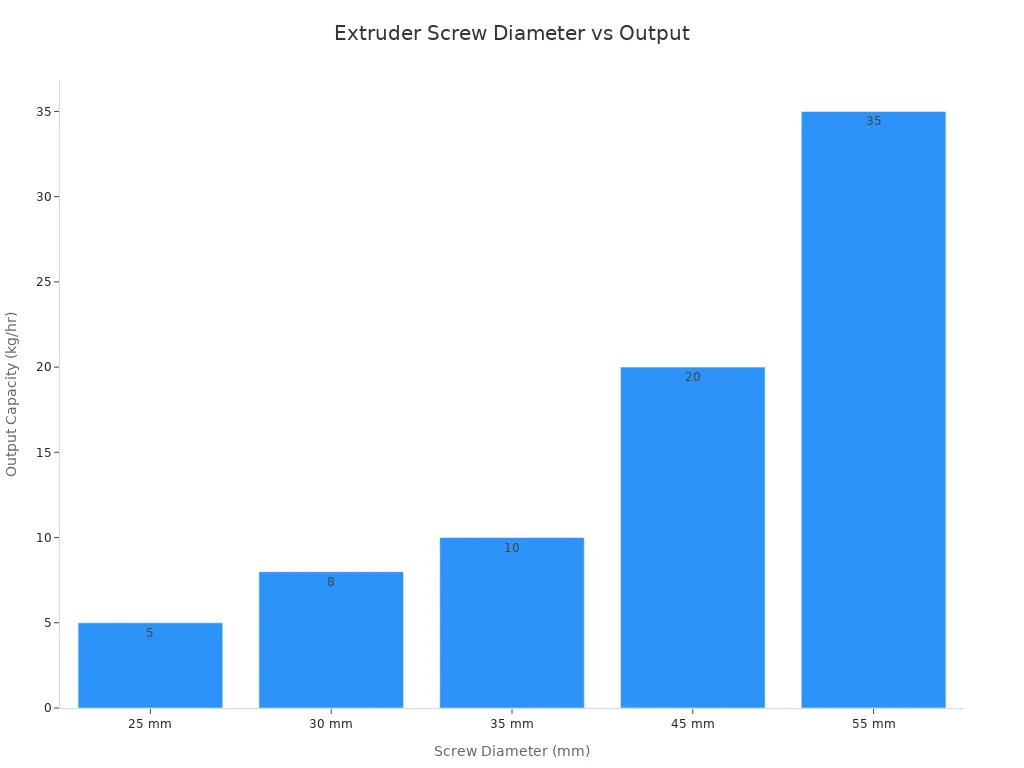
You begin with extruders and coextruders. These machines melt and push out materials like polyethylene and adhesive. The main extruder makes the core layer. Coextruders add the other layers. The screw size inside the extruder changes how much you can make each hour. Here is a table that shows how much each screw size can make:
Screw Diameter (mm) | Output Capacity (kg/hr) |
|---|---|
25 | 5 |
30 | 8-10 |
35 | 10-15 |
45 | 20-25 |
55 | 35-45 |
The extruder you pick changes how good your pipes are. A good extruder keeps the material moving smoothly. This helps the layers stick and keeps the pipe the right size. Here is a table that shows how different extruder features help:
Evidence Point | Explanation |
|---|---|
Material flow | The extruder design mixes and moves materials for even layers. |
Layer adhesion | The right setup helps the layers stick well, so pipes stay strong. |
Dimensional stability | Good pressure and temperature control keeps pipes the right size. |
Tip: Pick the right extruder size and type for your needs. This helps you make pipes faster and better.
After the material leaves the extruder, it goes through forming dies. These dies shape the pipe and make it round and smooth. The dies roll the material to form the pipe’s layers. Two or three round dies press and shape the pipe as it moves.
Next, a calibration system sets the final size. Steel segments cool the pipe and hold its shape. Vacuum ports help the pipe touch the steel closely for exact size. The pipe also goes through a vacuum calibration tank and spray cooling. Each step helps keep the pipe’s wall thickness even and meet quality rules.
Cylindrical die rolling makes precise shapes.
Forming dies spin and press the material for accuracy.
Calibration sizing uses cooled steel segments.
Vacuum ports help with better sizing.
The vacuum tank and spray cooling keep the pipe stable.
Note: Good forming and calibration help you make pipes that fit well in water and gas systems.
You need strong bonds between the pipe layers. Bonding units put on adhesive layers. Welding units, like ultrasonic welders, join the aluminum strip. Ultrasonic welding uses fast vibrations to melt and join the aluminum edges. This makes a tight, leak-proof seal. The process is quick and saves energy. You get pipes that last longer and do not leak.
Cooling systems help the pipe keep its shape and strength. Better cooling designs use water or air to cool the pipe fast. This stops the pipe from bending or warping. Here is a table that shows the main features of modern cooling and haul-off systems:
Feature | Description |
|---|---|
Enhanced Cooling Efficiency | Better cooling for fast, even results. |
Improved Product Quality | Keeps the pipe at the right temperature to avoid problems. |
Reduced Downtime | Less time lost to cooling issues, so you work faster. |
Energy Saving | Uses less energy, which saves money. |
Automatic Vacuum Control | Changes vacuum to stop overcooling or undercooling. |
Stable Water Level | Keeps water and temperature steady for best results. |
Haul-off systems pull the pipe along at a steady speed. They use long contact surfaces for a strong grip. This stops the pipe from slipping or stretching. When you match the haul-off speed with the extruder, you keep the pipe’s shape and thickness even. Strong grip and good speed control help you make pipes that look good and work well.
Tip: A good haul-off system keeps your work steady and your pipes looking great.
Once your pipe is cool and shaped, you cut it to the right length. Cutting systems use sharp blades or saws for clean cuts. Modern lines use CNC machines and lasers for more accuracy. These systems also check for problems, so you only get the best pipes.
Control systems help you run the whole line safely and smoothly. You use touch screens, sensors, and PLCs to set and watch temperatures, pressures, and speeds. The system gives you feedback and alarms if something is wrong. Automation lets you do more work with fewer mistakes. You can keep your line running fast and safe, while making high-quality pipes.
Note: Automated control systems make your job easier. You can set up, watch, and change your line with just a few taps.
A complete aluminum plastic composite pipe extrusion line uses all these parts together. When you pick the right machines and keep them working together, you get pipes that meet the highest standards for water, gas, and industry.
You want your factory to work fast and smooth. The aluminum plastic composite pipe extrusion line helps you do this. Automated controls let you pick the right temperature and speed. Sensors check each step to make sure pipes are the right size. You can make more pipes in less time. You also use less material and waste less.
Automated systems help you stop mistakes and keep your work steady.
You need pipes that last long and work well in hard places. The five-layer structure makes pipes strong. Tests show that temperature changes can make pressure go up and down in composite pipes. You must control pressure during tests to get real results. Getting older can change how well the layers stick and how strong the pipes are.
Here is a table that shows what tests found:
Key Findings | Implications for Long-Term Performance |
|---|---|
Environmental factors, especially temperature changes, make big pressure changes in composite pipes. | You need good pressure control to get true results in long tests. |
Hydrostatic tests showed big pressure changes from temperature swings. | Without pressure control, normal temperature changes can make pressure go up and down a lot, which makes tests less reliable. |
Long tests in real working conditions are needed to check how long pipes last. | Getting older changes how layers stick and how strong pipes are, which matters for tough places. |
You want pipes that keep heat inside and do not rust. The five-layer design helps with both things. The plastic layers make pipes bend and keep heat in. Hot melt adhesive sticks the layers together and stops leaks. The aluminum alloy makes pipes strong and fights rust.
Here is a table that shows what each layer does:
Layer | Function |
|---|---|
Plastic | Makes pipes bend and keeps heat in |
Hot Melt Adhesive | Sticks layers and stops leaks |
Aluminum Alloy | Makes pipes strong and fights rust |
Hot Melt Adhesive | Sticks layers and stops leaks |
Plastic | Makes pipes bend and keeps heat in |
Pipes with this design work well in places with changing temperatures and water types.
You save money when you use composite pipes. These pipes last longer and need fewer repairs than steel pipes. You can put them in faster and with less work. This lowers your costs. You also spend less fixing them because they do not rust or break easily.
Plastic extrusion machines need regular care and sometimes upgrades. Keeping your machines in good shape helps you avoid big repair bills and keeps your line working well.
Picking the right extrusion line helps you make strong pipes and save money for a long time.
Composite pipes move clean water in places like homes and schools. Hospitals also use these pipes for water. The inside plastic layer keeps out rust and dirt. This helps the water stay safe to drink. The five-layer structure stops leaks. It also keeps the water pressure steady. These pipes last a long time and do not break easily. You do not need to fix them often. Builders like to use these pipes for new buildings. They work well with modern plumbing.
Tip: Composite pipes bend without breaking. You can put them in small spaces easily.
Composite pipes are used in gas lines for homes and businesses. The five-layer design mixes plastic and metal together. This makes the pipes strong and safe for gas. The pipes help stop gas leaks and lower fire risks. Gas companies use these pipes because they are safe. They follow strict safety rules. You can trust these pipes for steady gas flow. There are fewer problems or emergencies.
The RIIFO Multilayer Gas Piping System has five layers.
This system works better and lowers the chance of leaks and fires.
People use composite pipes for heating and cooling. These pipes move hot or cold water in floors and walls. They also work in radiators. The aluminum layer keeps heat inside the pipe. The plastic layers stop rust and keep the pipe soft. Every room gets the same temperature. These pipes are good for homes and big buildings.
Application | Benefit |
|---|---|
Floor heating | Even heat distribution |
Radiator systems | No rust or leaks |
Cooling systems | Stable temperature flow |
Factories and workshops use composite pipes. The pipes carry water, air, and chemicals. The strong layers protect the pipe from heat and pressure. You can use these pipes where metal pipes might rust or break. The aluminum plastic composite pipe extrusion line makes pipes for many factory jobs. These pipes last longer and need less fixing. You save money because they do not break easily.
Note: Composite pipes are good for hard jobs. You can trust them in many places.
It is important to know how many pipes your factory can make each day. How much you make depends on your extruder size, line speed, and pipe type. A bigger extruder lets you make more pipes faster. Check the output for each screw size before buying a machine. Fast lines help you finish big orders and keep customers happy. If you want your business to grow, pick a line that lets you make more pipes when needed.
Tip: Always match your goals with the machine’s output. This helps you stop delays and save materials.
Good automation makes your work easier and safer. Modern extrusion lines use smart systems to help run the machines. Look for these features:
Programmable logic controllers (PLC) let you watch and control the line as it works.
Automated systems feed raw materials and control temperature for you.
Human-machine interfaces (HMI) make it easy to see and change settings.
These features help you avoid mistakes and keep things running well. You can change settings fast and spot problems early. Automation saves time and helps you make better pipes.
You need to keep your machines clean and working well. Regular checks help you find problems early. Clean the extruder screws and dies often. Lubricate moving parts to stop them from wearing out. Replace old parts before they break. If you follow a maintenance plan, you can stop long breaks and costly repairs.
Maintenance Task | How Often | Why It Matters |
|---|---|---|
Clean extruder screws | Weekly | Keeps material flow even |
Lubricate parts | Monthly | Stops wear and tear |
Replace worn parts | As needed | Prevents breakdowns |
Note: Good maintenance keeps your line working and helps you make strong pipes every day.
Pick a supplier who helps you after you buy the machine. Good suppliers give training, spare parts, and quick service. Ask about warranty and support before you choose. Compare prices, but also check what you get for your money. Sometimes, a cheap machine costs more in repairs and lost time. Pick a supplier who gives you value and stands behind their product.
If you choose well, you save money and avoid problems later.
You get lots of benefits when you know how the aluminum plastic composite pipe extrusion line works and what its main parts do. New methods like ultrasonic welding help you make pipes that are stronger and last longer. Good control helps you keep the pipes high quality and not waste materials.
Pick machines that fit what you need
Use automation and take care of your machines
Work with suppliers who help you when you need it
Doing these things helps you make the best pipes in your factory.
You get pipes with a strong five-layer structure. These pipes resist leaks, rust, and pressure changes. The process also helps you make pipes faster and with less waste.
You should clean the extruder screws and dies often. Lubricate moving parts. Replace worn parts before they break. Regular checks help you avoid long stops and costly repairs.
Yes, you can. The five-layer design keeps heat inside and stops leaks. The pipes work well for hot and cold water in homes, schools, and factories.
Look for automatic alarms, emergency stop buttons, and temperature sensors. These features help you spot problems early and keep your team safe.
Factor | What to Check |
|---|---|
Output Capacity | How many pipes you need |
Automation Level | Ease of use and control |
Supplier Support | Training and spare parts |
Cost | Value for your investment |