Views: 0 Author: Site Editor Publish Time: 2026-06-09 Origin: Site

Municipalities and agricultural sectors are shifting rapidly toward high-density polyethylene. They want to eliminate water loss entirely. They also aim to secure 100-year infrastructure lifespans for critical utility networks. Capitalizing on this massive industry demand requires processing high-performance polymer resins. A prime example is the ubiquitous PE 4710 grade. Manufacturers cannot compromise output speed or dimensional accuracy during the extrusion phase. Investing in heavy manufacturing equipment involves high stakes and complex engineering choices. Success depends entirely on aligning machine specifications directly to your target market. You might produce micro-irrigation tubing for agriculture. Alternatively, you might manufacture heavy-duty municipal water mains. This article provides plant managers and investors an evidence-based evaluation framework. You will learn how to minimize production risks effectively. We will also show you how to shortlist reliable machinery partners.
Extrusion output capacity must be directly mapped to your target pipe diameters (e.g., 20-90mm for drip irrigation vs. 100-450mm for municipal water).
High-yield production requires single-screw extruders with optimized L/D ratios (typically 30:1 to 36:1) to process dense PE grades without melt fracture.
Meeting industry standards (like ASTM D3350) requires precision vacuum calibration to maintain strict Dimension Ratios (DR) and minimize ovality.
Co-extrusion capabilities are non-negotiable for producing the mandatory industry color stripes (Blue for potable water, Purple for reclaimed/irrigation water).
Operating a manufacturing plant requires confronting specific implementation realities. You cannot buy a universal machine. Running a HDPE pipe production line outside its optimal range causes severe operational problems. It degrades energy efficiency heavily. It also ruins material yield. Operators attempting to stretch equipment capabilities often experience higher rejection rates.
Understanding the physics of plastic extrusion explains this limitation. Molten polymer behaves differently depending on the volume pushed through the die head. Thick-walled products require completely different thermal management strategies compared to thin-walled irrigation tubes. You must map your business goals to a specific sizing category.
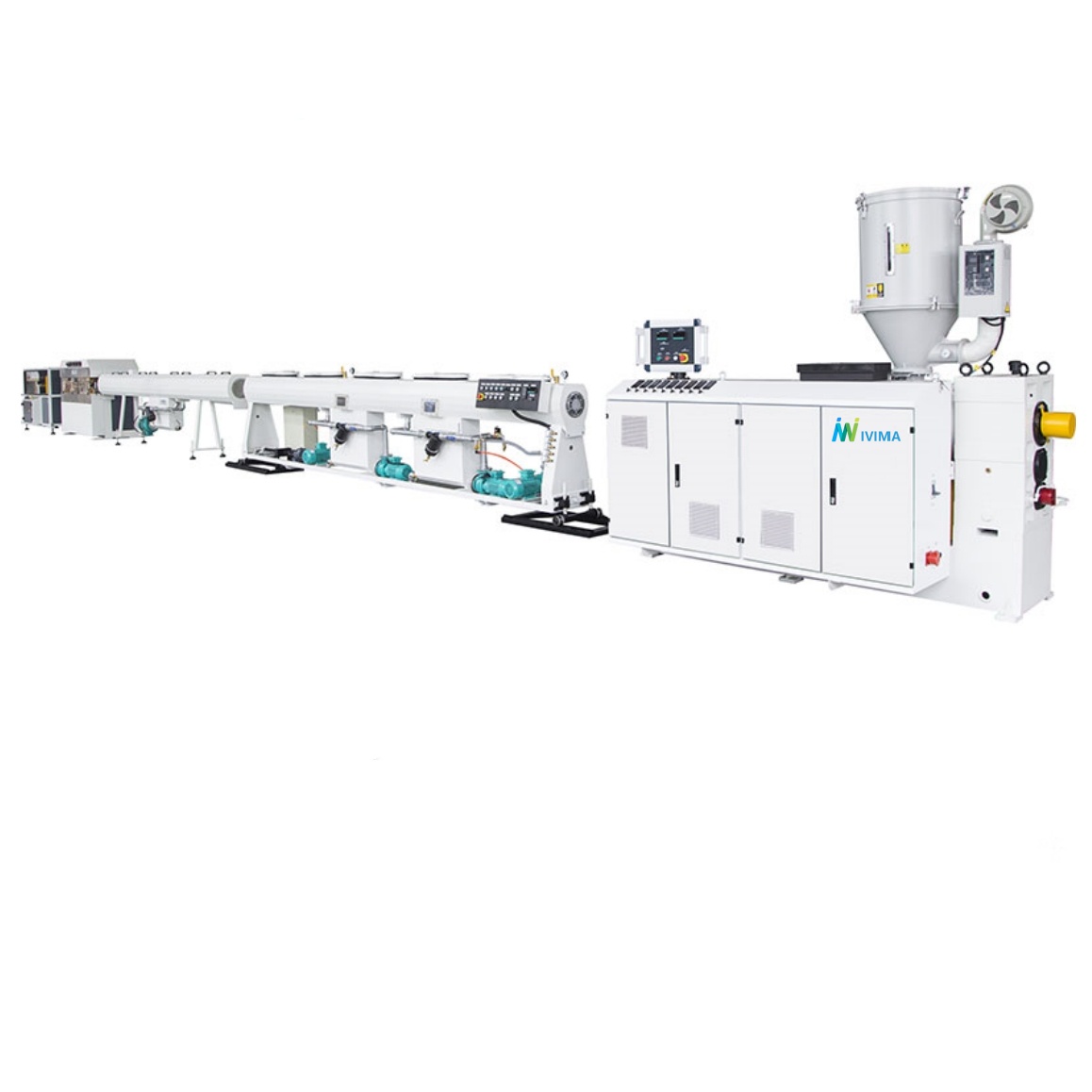
We categorize extrusion machinery into three primary operational brackets. Each bracket demands unique haul-off speeds and cooling configurations.
Diameter Range | Primary Applications | Key Equipment Priority | Target Output |
|---|---|---|---|
Small (20mm - 90mm) | Agricultural drip lines, golf course irrigation, household plumbing. | Rapid winding mechanisms, high-speed haul-off, immediate surface cooling. | 150–250 kg/h |
Medium (110mm - 450mm) | Municipal water supply, well plumbing, industrial fluid transport. | Robust caterpillar haul-off units, extended vacuum calibration tanks. | 450–650 kg/h |
Large (500mm+) | Heavy industrial water transport, main aqueducts, storm drains. | Specialized spiral die heads, multi-stage immersion cooling. | 650–1000+ kg/h |
Small diameter lines prioritize pure speed. You need machines capable of spooling flexible pipe rapidly. Cooling happens almost instantaneously due to the thin walls. Conversely, medium diameter production introduces weight constraints. The molten tube exiting the die head becomes heavy. Gravity pulls the material downward. You need robust haul-off units to prevent wall sagging before the plastic fully solidifies.
Large diameter manufacturing introduces immense thermal challenges. Processing thick-walled aqueduct pipes requires multi-stage cooling. A significant risk factor emerges here. Under-sizing the cooling tank length causes severe internal thermal stress. The outer wall solidifies quickly. The inner wall remains hot. This temperature differential causes post-extrusion shrinkage. Operators then face rejected batches and ruined credibility. You must specify cooling tank lengths strictly matched to your maximum intended wall thickness.
Modern infrastructure contractors demand near-perfect reliability. Buyers expect pipes boasting a 1/10,000,000 failure rate. These components must withstand intense butt-fusion welding in the field. Reaching this quality standard requires flawless mechanical components inside your facility.
Engineers consider the single-screw extruder the absolute heart of the operation. You must ensure the screw design specifically targets polyolefins. Standard PVC screws will fail miserably. Processing high-density resins like PE 4710 demands specific geometric configurations.
The Length-to-Diameter (L/D) ratio stands out as the most critical specification. A ratio between 30:1 and 36:1 provides optimal results. This extended length offers adequate residence time. It ensures homogeneous melting without requiring excessive barrel temperatures. Operating at lower melt temperatures prevents thermal degradation. It also preserves the long-term hydrostatic strength of the final product.
The molten polymer moves from the extruder into the die head. Here, you must evaluate melt pressure distribution carefully. Advanced spiral die heads divide the polymer flow into overlapping layers. This mechanism eliminates weld lines entirely. Poor melt distribution creates uneven wall thickness. Uneven walls compromise the hydrostatic pressure rating immediately. A pipe failing a pressure test on site ruins supplier relationships permanently.
Water and irrigation projects require strict visual identification codes. Installers rely on continuous color stripes along the outer wall. Your Plastic Pipe Machine needs a reliable secondary co-extruder mounted alongside the primary barrel. It embeds permanent pigmented stripes seamlessly.
Blue stripes: Indicate potable drinking water lines.
Purple stripes: Indicate reclaimed water or specialized irrigation lines.
Green stripes: Indicate sewer and wastewater lines.
This co-extrusion process must not weaken the core structure. The pigmented resin must fuse molecularly into the primary wall. Dedicated co-extruders synchronize their output precisely. They match the primary line speed automatically. This synchronization prevents the color stripe from smearing or separating under stress.
End-users calculate Dimension Ratios (DR) strictly. They design municipal systems handling specific internal water pressures. They also account for massive thermal expansion. High-density polyethylene can expand up to 8 inches per 200 feet under extreme temperature shifts. Your HDPE pipe extrusion line must guarantee DR consistency to handle these environmental stresses safely.
You cannot rely on manual material mixing or volumetric dosing. Bulk density fluctuates constantly between different resin batches. Environmental humidity also changes material flow characteristics. Gravimetric feeding systems provide the necessary engineering control. They measure raw material weight continuously before it enters the feed throat.
These systems adjust the screw speed automatically. They ensure exact material dosing per meter of pipe. This precision prevents raw material waste. More importantly, it ensures the wall thickness remains mathematically constant throughout a 24-hour production shift.
Molten plastic exiting the die head has no structural integrity. It passes immediately into the sizing sleeve. The vacuum calibration tank provides negative pressure. It pulls the soft polymer against the rigid sizing sleeve. You must look for automated vacuum pressure controls. Typical operating ranges fall between 0.08 and 0.12 MPa.
Precise temperature regulation inside these tanks prevents ovality. Ovality refers to a pipe losing its perfectly round shape. Out-of-round pipes create massive field installation problems. Contractors cannot perform electrofusion or thermal butt fusion on oval pipes. Strict calibration sizing eliminates this defect entirely.
Modern extrusion relies on centralized computer intelligence. You need advanced Programmable Logic Controllers (PLC) paired to Human-Machine Interfaces (HMI). These systems synchronize everything seamlessly.
If the haul-off caterpillar accelerates slightly, the extruder must push more material instantly. Manual adjustments often result in scrapped lengths of pipe. Operators cannot react fast enough to minor fluctuations. Automated synchronization maintains tension perfectly. It prevents stretching, tearing, or buckling during the cooling phase.
Selecting an equipment supplier requires rigorous vetting. You must differentiate between simple equipment brokers and true manufacturing partners. A genuine partner understands polymer metallurgy thoroughly. They understand fluid dynamics inside spiral die heads.
Use the following logic to shortlist potential machinery partners. Ask them specific technical questions. Demand documented proof over marketing brochures.
Factory Testing Protocols (FAT): Do you offer full-load wet testing before shipping? You should mandate a Factory Acceptance Test. Ship your specific PE 4710 resin grade to their facility. Watch the machine process your exact material. Different resin grades exhibit unique melt flow indexes. Equipment performing well on standard PE 100 might struggle processing specialized irrigation grades.
Turnkey Support Capabilities: Do you provide auxiliary equipment? Extrusion requires a closed-loop production environment. You need industrial chillers maintaining strict water temperatures. You need gravimetric mixers handling virgin resin and recycled regrind precisely. You also need crushers for scrap management. Sourcing these components from multiple vendors creates integration nightmares.
Installation and Training Standards: Are your technicians factory-certified? Dropping heavy machinery onto a concrete floor is insufficient. Your partner must install the equipment professionally. They must train your operators onsite. Operators need training on identifying melt fracture early. They need guidance on solving surface roughness quickly. Ask about the duration of their onsite training programs.
Spare Parts Availability: What is the guaranteed lead time for critical wear parts? Extruders run continuously. Screws experience abrasive wear. Calibration sleeves degrade over time. Heater bands burn out. A machine sitting idle waiting for a replacement part ruins delivery schedules. Secure a guaranteed service level agreement for critical components before signing purchase contracts.
Choosing the correct equipment means looking far beyond standard brochure specifications. You must focus heavily on verifiable production stability. Evaluating single-screw geometries prevents catastrophic polymer degradation. Verifying automated vacuum calibration ensures perfect joint integrity in the field. Mandating factory acceptance testing protects your capital investment upfront.
Begin by auditing your target market thoroughly. Document the most requested pipe diameters in your region. Note the required pressure ratings and color striping mandates. Use these exact specifications to request detailed proposals. Demand component-level transparency from your shortlisted machinery manufacturers. A line consistently holding strict DR tolerances will protect your margins easily. It will simultaneously build your long-term reputation in the competitive water infrastructure market.
A: For high-density polyethylene, a Length-to-Diameter (L/D) ratio ranging from 30:1 to 36:1 serves as the industry standard. It provides the necessary residence time. This ensures thorough melting and homogenization. It accomplishes this without overheating or degrading the polymer chains.
A: Quality lines utilize a secondary co-extruder mounted directly alongside the main barrel. It feeds pigmented resin into the primary die head. This process seamlessly fuses the color stripe into the outer wall. It creates a permanent visual code without compromising structural integrity.
A: Vacuum calibration tanks use negative pressure inside a sizing sleeve. They hold the molten plastic outward while it cools rapidly. This mechanism ensures exact outer diameter dimensions. It guarantees perfect roundness. This precision is mandatory for creating leak-free thermal fusion joints onsite.
A: No. Cooling requirements, haul-off speeds, and extruder melt capacities differ vastly between extreme sizes. Machinery is categorized into dedicated size brackets. Attempting to bridge massive diameter gaps on a single machine causes severe mechanical inefficiency and high scrap rates.