Views: 0 Author: Site Editor Publish Time: 2026-07-01 Origin: Site

Choosing the wrong cutting technology can cripple your production floor. A mismatched system creates cascading operational failures rapidly. You might face excessive downtime from continuous strand breakage. Alternatively, off-spec pellet geometries will severely reduce your final material quality. The decision between water ring and strand cutting is rarely about which technology performs better overall. Instead, you must strictly evaluate your polymer melt flow index (MFI), factory footprint, and desired throughput volume.
Plant managers cannot rely on guesswork here. Making an assumption often leads to stalled production lines. This guide provides an evidence-based framework to help you evaluate specific tradeoffs accurately. You will learn how material viscosity dictates equipment selection. We also outline common failure points and maintenance realities. We explore how operator skill levels interact with machine complexity. By the end, you can specify the exact cutting method required for your compounding or recycling lines confidently.
Water Ring Pelletizing: Best suited for polyolefins (PP, PE) with fluctuating melt indices. Offers a highly compact footprint and minimizes operator intervention.
Strand Cutting: The industry standard for rigid plastics, high-viscosity melts, and compounding. Requires more floor space but delivers high versatility for materials like PET and PVC.
Material-Driven Selection: Utilizing highly specific setups (like a PET Flake Pelletizing Line or a PVC Compounding Pelletizing Line) dictates the cutting method—ignoring material viscosity leads to die blockages or pellet clumping.
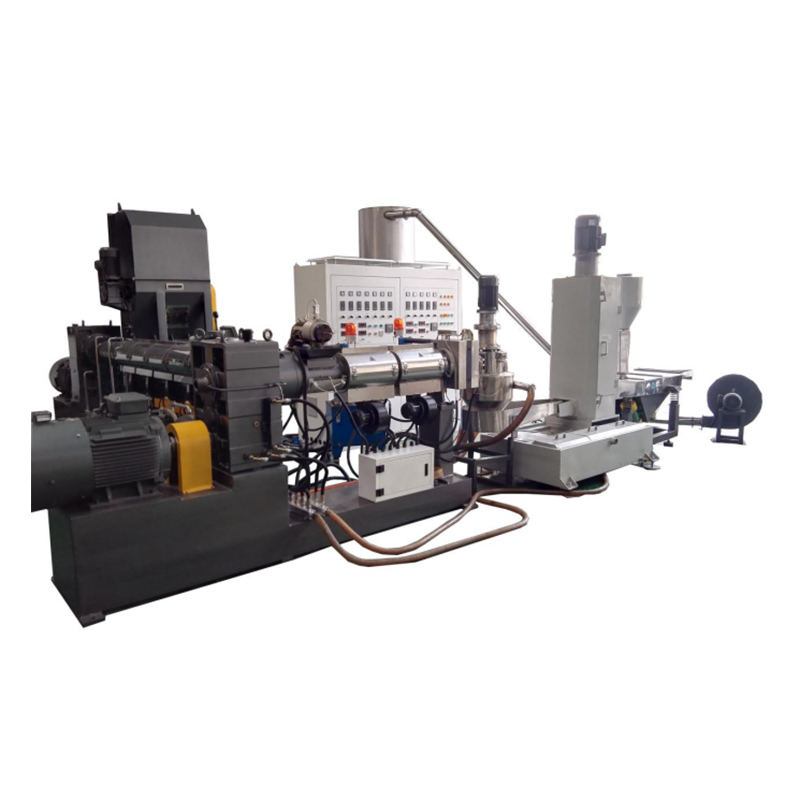
A modern Plastic Pelletizing Machine typically utilizes one of two primary cutting architectures. Understanding how they manipulate molten polymer helps you avoid processing bottlenecks. Let us break down the exact mechanical flow step by step. You must understand these basics before making procurement decisions.
The process begins the moment polymer melt exits the extruder die face. Rotating knives slice the molten material immediately upon exit. Centrifugal force then flings these hot pellets outward instantly. They drop directly into a circulating water ring for rapid cooling. Finally, the system transports them into a centrifugal dryer. The dryer spins the pellets rapidly to remove surface moisture. Operators collect the dry, spherical pellets for packaging.
This method relies on a critical technical assumption. The material must possess sufficient surface tension naturally. This tension allows it to form a uniform, spherical pellet before the water cools it. If the tension is too low, the shape collapses. The polymer might also wrap around the cutting blades. This wrapping causes immediate mechanical jamming and ruins the entire batch.
Strand cutting separates the extrusion and cutting phases geographically. The machine extrudes polymer melt into continuous long strands first. Operators draw these strands through a long water cooling bath manually. The water bath absorbs the intense heat gradually. An air knife then strips away residual moisture from the solid strands. Finally, a rotary cutter chops the rigid strands into standard cylindrical pellets.
This technique demands fundamentally different material properties. The polymer must have sufficient melt strength inherently. It needs to stretch and span the cooling trough without snapping. If it breaks, production halts completely. Operators must then intervene to re-establish the line tension. This manual intervention creates scrap material and wastes valuable production time across the shift.
Your raw material profile strictly dictates your cutting technology. Forcing incompatible plastics through the wrong die head guarantees operational failure. We must align the polymer thermal behavior with the mechanical design. Ignoring these rules invites daily operational headaches for your maintenance team.
Water ring systems handle standard polyolefins beautifully. They are ideal for LDPE, HDPE, and PP. These materials often exhibit viscosity fluctuations during extrusion. A hot die face accommodates these slight shifts well. The die keeps the material flowing smoothly despite minor changes in density.
You will frequently see this technology integrated into specific recycling setups. For example, a Side Force Feeding PP PE Pelletizer uses water rings effectively. The feeding mechanism pushes variable scrap into the extruder directly. Similarly, an Agglomerate Type Pelletizing Line benefits from a hot die face configuration. Post-consumer recycling inputs naturally have slight inconsistencies in bulk density. The water ring forgives these minor melt flow variations perfectly.
However, it has distinct limitations you must respect. You should never use it for highly fluid melts like nylon or PET. Extremely sticky polymers are also highly problematic. They will simply smear across the die face instead of cutting cleanly. This smearing ruins the blade alignment rapidly and degrades the entire die plate over time.
Some materials demand strict cooling protocols before the blade ever touches them. Strand cutting is mandatory for these specific polymers. They often lack the surface tension to form neat spheres naturally. By cooling the strand completely first, you ensure a precise cut. The rigid material shears cleanly under the heavy rotary blade.
This method is absolutely critical for a PET Flake Pelletizing Line. Melted PET has a water-like viscosity. It requires an immediate and structured thermal drop to solidify correctly. Without this structured drop, you cannot process it into pellets. Likewise, a PVC Compounding Pelletizing Line depends heavily on strand cutting. PVC needs precise thermal control and specialized cooling to prevent degradation. Heat damages PVC quickly if trapped inside a large, uncooled pellet.
There are limitations here too. Rigid strands are highly susceptible to breakage. If your cooling bath temperatures fluctuate, strands snap immediately. Mismatched drawing speeds cause the exact same issue. Operator vigilance remains critical during the entire production run to monitor strand tension.
Factory floor space is a finite resource. The physical footprint of your equipment impacts overall plant layout directly. Let us compare how these two systems scale physically. You must plan your facility logistics around these precise dimensions to maintain safe walking paths.
Water ring systems provide highly compact footprints. They eliminate the need for long cooling baths entirely. In many cases, you save up to 40% of the linear floor space. This density allows you to fit more lines into a smaller warehouse. Plant managers appreciate this efficiency when expanding operations. You can optimize your available square footage dramatically.
Conversely, strand lines require extensive cooling troughs. These water baths often span 4 to 6 meters depending on your throughput goals. The polymer core temperature must drop sufficiently before reaching the rotor knives. You cannot rush this thermal exchange process. Shortening the bath results in soft pellets. Soft pellets jam the rotary cutter immediately and cause severe clumping.
Both configurations scale well for industrial volumes. However, high-throughput strand systems demand significantly higher operator oversight. Workers must manage and string multiple strands simultaneously. Managing twenty strands requires intense focus and steady hands. A large water ring system handles higher volumes automatically once dialed in. The enclosed system scales upward without demanding extra floor staff.
System Feature | Water Ring Technology | Strand Cutting Technology |
|---|---|---|
Floor Space Required | Highly compact; saves up to 40% linear space | Extensive; requires 4 to 6 meters of cooling baths |
Throughput Scaling | Excellent for high volumes; fully automated flow | Requires additional operators to manage extra strands |
Optimal Melt Flow Index | Variable to moderate (PP, PE, LDPE) | Strict high or extremely low viscosity (PET, PVC) |
Pellet Geometry | Lens-shaped or rounded spheres | Perfectly uniform rigid cylinders |
Every technology presents unique operational risks. You must prepare your maintenance team for these specific realities beforehand. Recognizing failure modes early prevents extended downtime and material loss.
This remains the most common operational risk for strand cutters. Several factors cause strands to snap mid-production. Variations in melt pressure easily break the line tension. Contamination in the melt filter creates weak points instantly. Improper cooling bath temperatures also cause severe brittleness. When a break occurs, operators must intervene immediately to re-string the line. This delay creates unrecoverable scrap material. Constant monitoring becomes a mandatory shift duty.
Running the cooling bath at a severely low temperature. This shock-cools the strand, making it highly brittle.
Ignoring melt filter pressure changes. Pressure spikes usually indicate contamination, which creates weak points in the polymer strand.
Water ring operations rely on precise thermal balances entirely. If your knife pressure is incorrect, the cut fails. If the melt temperature drops unexpectedly, disaster strikes. The polymer will freeze inside the die holes instantly. Alternatively, it smears across the entire die face. This smearing leads to misshapen pellets. Buyers often reject material deliveries containing severe clumping or long tails. Recovering from a frozen die head takes hours of intense physical labor.
Inspect the die face visually between every shift change. Look for micro-clumping near the extrusion holes.
Calibrate the water pump pressure weekly. Inconsistent water flow causes immediate pellet deformation and systemic clumping.
Routine upkeep differs drastically between the two methods. For strand cutters, teams focus heavily on the rotary blades. You must replace or sharpen rotary strand knives constantly. The pulling rollers also require frequent resurfacing. For water ring setups, maintenance shifts to the die head. Teams must perform careful die-face resurfacing periodically. They also replace water-ring blades on a strict schedule. Both require diligent schedules to maintain ultimate pellet quality. Neglecting either system guarantees poor material yields.
Selecting the perfect setup requires a structured approach. Use the following steps to finalize your engineering requirements properly.
Step 1: Audit Your Polymer. Identify the exact melt strength and MFI. You must request technical data sheets from your material suppliers. High melt strength dictates a strand cutter. Moderate or variable MFI points toward a water ring system. Testing the material in a laboratory setting prevents catastrophic purchasing mistakes. If you process mixed post-consumer scrap, assume your MFI will fluctuate daily.
Step 2: Evaluate Operator Skill Level. Assess your labor force realistically before making a decision. Do you have trained workers to monitor and re-string a strand line constantly? Strand lines require acute physical dexterity and constant attention. If labor is tight, you might need the closed-loop automation of a water ring system. The water ring system handles the transfer automatically. Operators only need to monitor the final centrifugal dryer output.
Step 3: Define Output Geometry. Consult your end buyers directly before specifying equipment. Do they require perfectly cylindrical pellets? Injection molding clients often demand exact cylinders for consistent hopper feeding. If so, you must use strand cutting. Are lens or spherical shapes acceptable for their hoppers? Then a water ring is perfectly viable. Always confirm geometry requirements in writing.
Next Steps: Do not purchase equipment blindly. Require your vendors to run extensive material trials. Provide them with your specific scrap or raw material formulation. Verify the pellet quality physically before finalizing any purchase order. Ask for sample bags from the test run. Analyze these samples for dust content and uniform sizing.
Your choice between water ring and strand cutting fundamentally dictates overall operational efficiency. It sets the baseline for your entire shift output.
Forcing incompatible material through a compact system guarantees increased downtime. You will also suffer from inferior pellet pricing in the market.
Verify melt strength and surface tension before committing to a specific die configuration. These physical properties are non-negotiable.
Consult your engineering teams early in the process. You must match extruder specs, filtration systems, and cutting methods accurately.
Always demand physical material trials from equipment vendors using your exact formulation. Real-world testing prevents expensive installation mistakes.
A: Generally, no. PET has a very low melt viscosity. It flows almost like water when melted. Because of this extreme fluidity, the polymer will smear across a hot die face rather than cutting cleanly. You must utilize a strand cutter or a specialized underwater system to process PET successfully without clogging the machine.
A: Clumping occurs when pellets fail to cool rapidly. This usually results from excessively low water flow inside the ring. Dull cutting knives also contribute by creating jagged edges that stick together easily. Additionally, processing a material with a high melt flow index can cause clumping if it hits the water too hot.
A: Maintenance focus simply shifts. Strand cutting generally requires more manual labor during operation. Workers must manage the physical strands and routinely sharpen the rotor knives. Water ring maintenance demands less manual oversight day-to-day. However, it requires highly precise mechanical alignment and periodic, careful replacement of the die-face blades to prevent smearing.