Views: 0 Author: Site Editor Publish Time: 2026-07-23 Origin: Site

The profitability of a plastic recycling line relies heavily on consistent throughput. This metric depends almost entirely on how efficiently material enters the extruder. Many operators treat low-density PP/PE film and high-density rigid flakes as interchangeable feedstocks. This major mistake leads to material bridging inside the hopper. It creates inconsistent melt pressure along the screw. Ultimately, it severely reduces your overall output capacity.
This guide breaks down the engineering differences between feeding systems for film versus rigid plastics. You will learn exactly how to match your material’s bulk density with the correct feeding technology. We outline practical steps to protect your machinery investment. By implementing these strategies, you ensure a steady material flow, reduce machine wear, and maximize your operational returns.
Material bulk density is the primary factor dictating feeding system selection; mismatched systems cause hopper bridging or screw starvation.
Rigid flakes require precise, volumetric or gravimetric control to prevent overfeeding and maintain steady melt pressure.
Lightweight PP and PE films require mechanical densification prior to extrusion, typically achieved through either an agglomerator (cutter compactor) or a side force feeder.
Selecting the wrong configuration increases energy consumption per kilogram and accelerates wear on the extruder screw and barrel.
Understanding material behavior begins with examining physical properties. Washed PP and PE films possess drastically different flow mechanics compared to rigid regrind. You must account for these variations before configuring your feeding system.
Physical realities separate flexible packaging from rigid containers. Washed film is exceptionally light and fluffy. It retains a massive amount of air between its layers. The bulk density of shredded film typically hovers around 30 to 50 kilograms per cubic meter. Conversely, rigid regrind flakes are dense and heavy. Crushed bottles or injection-molded scraps naturally resist interlocking. Their bulk density often exceeds 300 to 400 kilograms per cubic meter. This massive disparity means you cannot process both materials using identical hopper setups.
Feeding lightweight film into a standard gravity hopper guarantees failure. Film scraps possess high surface area and generate static electricity. As they funnel down toward the screw, they interlock. Friction against the hopper walls quickly exceeds the downward pull of gravity. This creates an arch or "bridge" of material right above the feed throat.
Bridging starves the extruder. The screw continues spinning without receiving fresh plastic. This leads to immediate heat degradation. The residual polymer inside the barrel burns, creating black specks and compromising pellet quality.
Manufacturers often advertise impressive nameplate capacities. However, a high-capacity extruder only achieves these numbers under optimal conditions. The feeding system must deliver a continuous, air-free material stream directly to the screw. Air trapped inside fluffy film displaces plastic volume. If you do not remove this air before extrusion, your output plummets. Real-world throughput depends entirely on continuous density optimization at the inlet.
Processing rigid plastics requires an entirely different approach. Heavy flakes do not suffer from the same air-entrapment issues as films. However, they present their own unique mechanical challenges. Precision becomes the ultimate goal.
Hard, crushed rigid flakes act much like gravel. Materials such as HDPE detergent bottles or PP battery cases easily gravity-feed into the extruder. Their weight pulls them swiftly down the hopper slopes. The flakes slide past each other without tangling. This free-flowing nature eliminates the need for mechanical compaction. Instead, operators must focus on restricting and controlling this rapid flow to avoid overloading the screw.
Because rigid materials flow so easily, they can overwhelm the feed throat. This makes specialized dosing equipment mandatory. Implementing Dose-Feeding Plastic Pelletizer systems ensures volumetric or gravimetric precision. These dosing units regulate the exact volume or weight of flakes entering the barrel per minute. They prevent "surge feeding," a condition where a sudden avalanche of heavy flakes over-torques the main motor. Consistent dosing maintains perfectly uniform melt pressure throughout the extrusion process.
Recycling facilities rarely process perfectly uniform flakes. Mixing different rigid flake sizes creates a massive implementation risk. Large, thick chunks melt slower than thin, small flakes. If you dump a mixed batch into a gravity hopper without proper dosing, the heavy pieces segregate from the light ones. This causes uneven melting inside the barrel. You will encounter unmelted particles in your final product. Precise dosing units blend and pace the material, resolving this inconsistency.
You can quickly evaluate your rigid feeding setup using two indicators. First, check your control panel for steady amp draw on the extruder motor. Fluctuations indicate inconsistent feeding. Second, physically inspect the primary hopper. You should observe zero bridging and a smooth, continuous material descent.
Film recycling forces operators to confront extreme material volume. A massive pile of agricultural film yields very little actual plastic weight. You must overcome this volume-to-weight ratio to achieve profitable throughput.
Agricultural films, stretch wraps, and woven bags contain up to 90% air by volume. If you drop them into a standard feed throat, the screw grabs mostly air. The machine runs highly inefficiently. You must densify the material mechanically before it enters the melting zone.
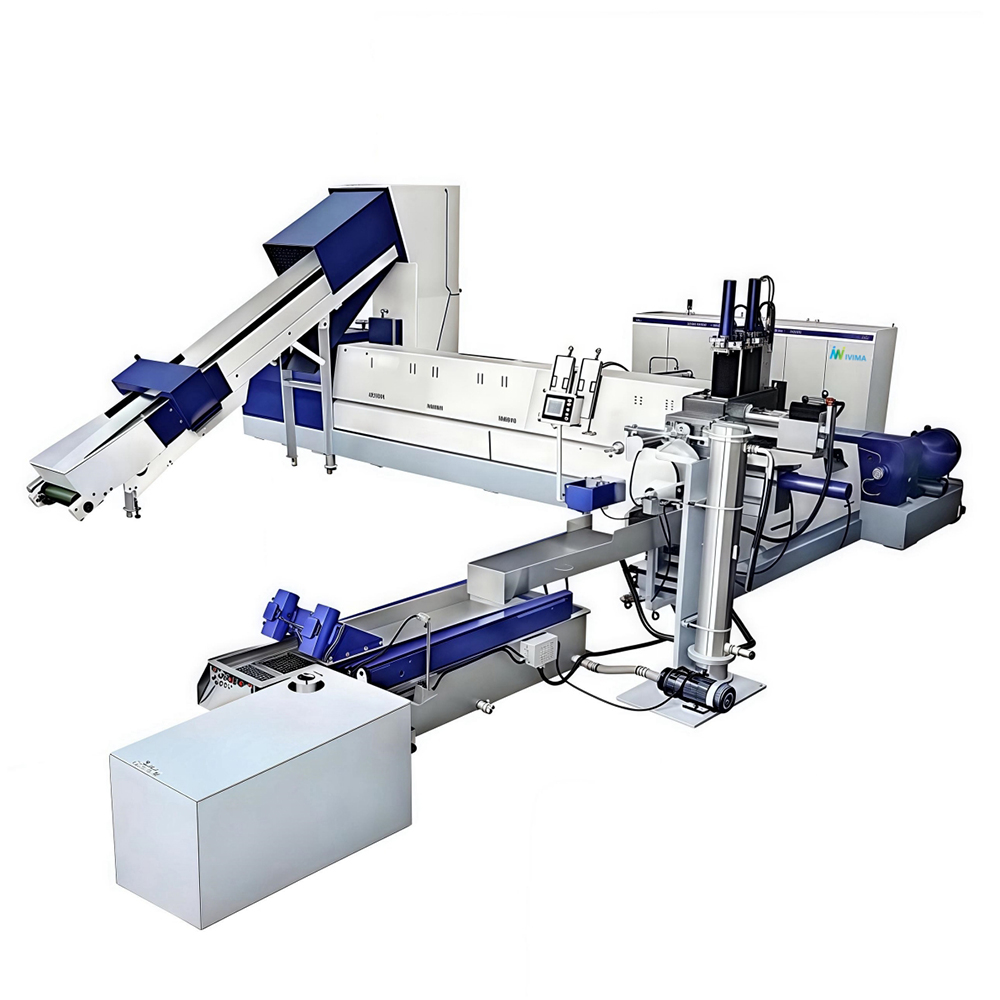
One highly effective method utilizes an auxiliary auger. A Side Force Feeding PP PE Pelletizer employs a dedicated screw positioned at a right angle to the main extruder barrel. This mechanism actively grabs lightweight scraps. It mechanically pushes them into the main screw flights under high pressure.
This system performs best under specific conditions. It excels when handling pre-shredded, highly uniform film. The material must be clean and possess consistent moisture levels. Side feeders provide excellent throughput consistency if your upstream shredding process is reliable.
Highly fluffy materials demand a more aggressive approach. Integrating a cutter compactor directly at the extruder inlet solves severe density issues. An Agglomerate Type Pelletizing Line features a massive vertical drum equipped with rotating blades. As these blades spin at high speeds, they chop the incoming film.
This process generates intense frictional heat. The heat simultaneously dries and densifies the film. The plastic reaches a semi-molten, popcorn-like state. Centrifugal force pushes this dense, heated material directly into the extruder screw. This configuration is the ultimate choice for post-consumer films carrying residual moisture. The compactor effectively pre-heats the plastic and aids significantly in degassing trapped air.
Choosing between these two film-feeding technologies requires careful evaluation. Each system influences your facility's daily operations differently.
System Comparison Metrics
Feature | Side Force Feeder | Cutter Compactor |
|---|---|---|
Mechanism | Auxiliary horizontal auger pushing material | Vertical rotary blades generating friction |
Energy Consumption | Lower overall KW/hr requirement | Higher initial peak KW/hr requirement |
Material Preparation | Requires uniform pre-shredding | Can handle larger, irregular scraps |
Moisture Tolerance | Strictly requires dry material | Tolerates slight residual moisture |
Maintenance Focus | Auger alignment and motor syncing | Regular blade sharpening and replacement |
Energy efficiency impacts your bottom line directly. A side-feeder setup generally requires fewer kilowatt-hours per kilogram of processed material. It strictly relies on mechanical pushing rather than heat generation. Conversely, an integrated cutter-compactor system consumes more energy upfront. Spinning heavy rotor blades through dense plastic requires massive motor power. However, this energy is not wasted. The frictional pre-heating reduces the melting workload on the primary extruder.
Moisture wreaks havoc on plastic extrusion. It causes foaming at the die head and degrades pellet strength. Side force feeders lack pre-heating capabilities. Therefore, they demand thoroughly pre-dried material. Cutter compactors offer a distinct advantage here. The intense friction inside the drum vaporizes small amounts of surface moisture before the plastic reaches the screw. They can safely handle slightly higher residual moisture levels.
Facility layout and maintenance schedules differ significantly between setups. Cutter compactors demand substantial vertical space. Their massive drums sit high above the extruder inlet. They also require frequent maintenance. Operators must regularly sharpen or replace the heavy rotary blades to maintain frictional efficiency.
Side force feeders occupy a wider horizontal footprint. Their maintenance revolves around precision. Technicians must ensure perfect alignment between the side auger and the main screw. Furthermore, operators must carefully synchronize the side feeder's RPM with the main extruder's RPM to prevent blockages.
Operational flexibility matters when feedstock availability fluctuates. Side feeders handle pure film well but struggle if you suddenly introduce heavy rigid chunks. The auxiliary screw can jam. Cutter compactors handle 100% film flawlessly. They can also process a mixed blend of film and a small percentage of rigid plastics. However, running pure rigid flakes through a compactor is dangerous.
You cannot buy recycling equipment based on guesswork. You need a structured approach to select a Plastic Pelletizing Machine that perfectly aligns with your raw materials.
Begin by auditing your primary material stream. Quantify exactly what enters your facility daily. Ask yourself these key questions:
Are we processing 100% rigid containers?
Are we strictly recycling agricultural and packaging films?
Do we handle a fluctuating daily mix of both materials?
Your baseline dictates the foundational architecture of your machine. Never invest in specialized film equipment if your primary contracts supply rigid bottles.
Many modern recycling facilities refuse to be locked into one material type. Manufacturers now offer advanced hybrid machine configurations. A hybrid setup might feature a cutter compactor for lightweight film processing alongside an auxiliary dosing hopper for rigid flakes. This allows operators to bypass the compactor when running pure rigid materials. Hybrid solutions provide unmatched operational flexibility, allowing you to adapt to rapidly changing market demands.
Never trust theoretical specifications alone. Require real-world validation before finalizing any purchase. Recommend running a comprehensive material trial with your chosen equipment manufacturer. Ship at least 1,000 kilograms of your typical, unwashed feedstock to their testing facility. Monitor the trial closely. Verify their throughput claims in real-time. Check the steady-state energy consumption. Examine the final pellets for density and degassing quality. A successful trial eliminates post-installation surprises.
There is no universal feeding system in plastic recycling. Operational success requires strict alignment between equipment and material physics. The right machine must be engineered entirely around the specific bulk density and flow characteristics of your input material. Treating film and flakes interchangeably guarantees mechanical failure.
Your next step is clear. Compile a detailed material specification sheet for your facility. Document your exact moisture content averages, expected bulk densities, and common contamination levels. Present this comprehensive data to equipment manufacturers before requesting quotes. This targeted approach ensures you invest in a feeding system that guarantees continuous throughput and long-term profitability.
A: You can process a small percentage of rigid flakes mixed with film. However, running 100% heavy rigid flakes through a cutter compactor is highly destructive. The heavy chunks can shatter the rotary blades. They will overload the compactor motor instantly and severely damage the internal baffle plates.
A: Fluctuating output usually stems from upstream inconsistencies. Common causes include irregular pre-shredding sizes or highly variable material moisture. Additionally, check your control panel. There might be a severe mismatch between the side feeder RPM and the main extruder RPM, causing improper material pacing.
A: Simple gravity hoppers function adequately for very basic setups with perfectly uniform material. However, dose-feeding is absolutely critical for high-end applications. It prevents surge feeding, protects the motor from over-torquing, and guarantees exact additive blending for high-quality final pellets.
A: High moisture levels dictate different technologies. Films with residual moisture typically require a cutter-compactor system. The frictional heat provides essential pre-drying. Conversely, side-feeders lack pre-heating functions. They demand thoroughly pre-dried material to prevent severe foaming and quality degradation at the die head.