


Views: 0 Author: Site Editor Publish Time: 2026-04-24 Origin: Site
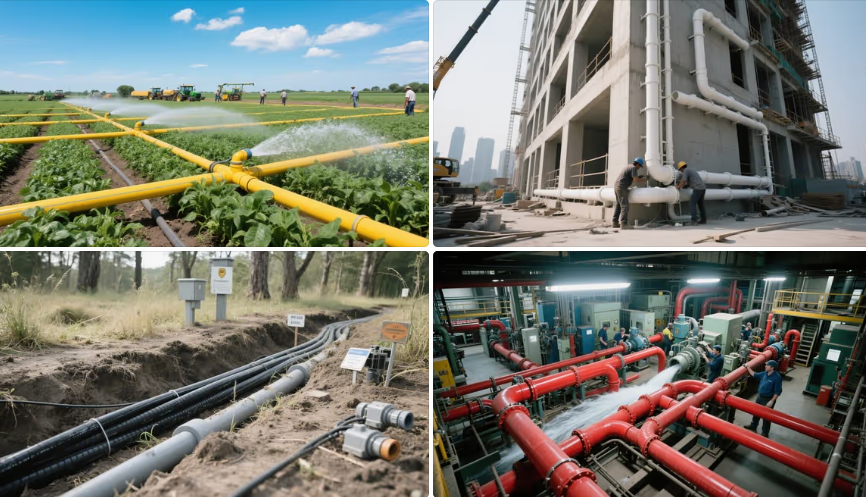
Selecting the right PVC Pipe Machine is a foundational decision for any manufacturer entering the conduit, drainage, and water pipe market. Whether you are establishing a new factory or upgrading an existing setup, the efficiency, quality, and profitability of your PVC pipe production depends heavily on choosing the proper equipment. In this article, we will break down the essentials of selecting the right PVC Pipe Machine, explain what to look for in a Plastic Pipe Machine, explore how a PVC Pipe Extrusion Line operates, and analyze key data to support your purchasing decisions.
Pipe manufacturing is one of the most competitive industries in plastics processing, and with the application of PVC pipes in water supply, drainage, electrical conduits, irrigation, and sanitation systems, understanding your machine selection has never been more crucial. PVC pipe capacity and performance directly influence your product’s market competitiveness, cost efficiency, and quality compliance. By the end of this guide, you’ll be equipped with data‑informed insights and strategic criteria to make the right choice.
A PVC Pipe Machine is specialized extrusion equipment designed to convert polyvinyl chloride raw materials into continuous pipes of designated diameters and performance specifications. This machine is the central element in a PVC Pipe Extrusion Line, which includes auxiliary equipment such as calibration tanks, cooling systems, haul‑offs, and cutting units. The extrusion process melts and shapes raw PVC through a die, solidifies it, and outputs finished pipe products ready for downstream use.
The quality and capabilities of the machine dictate product attributes such as diameter range, wall thickness precision, surface finish, dimensional tolerances, and production speed. These features directly influence your output capacity and return on investment.
Here is a simplified overview of how a PVC Pipe Machine functions within the PVC Pipe Extrusion Line:
PVC Pipe Production Flow
Raw Material Feeding: PVC resin and additives are pre blended and fed into the extruder hopper.
Melting & Mixing: The machine’s screw heats and homogenizes the polymer melt.
Shaping Through Die: The molten PVC passes through a die to form the pipe profile.
Cooling & Calibration: A calibration tank and cooling system solidify the pipe while maintaining dimensions.
Haul‑off & Cutting: The pipe is pulled forward by traction units and cut to length.
Inspection & Packaging: Final quality check and packaging for distribution.
Before choosing equipment, it’s essential to define your production goals. Every manufacturing context — small‑scale batch production or large‑volume industrial output — demands specific considerations.
Determine the volume of pipe you need to produce on a daily or hourly basis. Do your customers require high‑volume mass supply, or do you need flexibility for batch production?
| Capacity Level | Recommended Equipment Type | Typical Use Case |
|---|---|---|
| Low | Compact PVC Pipe Machine | Small diameter conduit pipes |
| Medium | Standard PVC Pipe Machine | Mid‑range conduit & drainage pipes |
| High | Heavy‑duty PVC Pipe Machine | Large water pipe manufacturing |
Production capacity directly impacts your choice of extruder size, screw diameter, drive power, and supporting infrastructure. For higher throughput, machines with greater plasticizing capacity and a more robust extruder system are essential.
One of the most critical decisions is the pipe size range your PVC pipe plant will cover. A machine optimized for small PVC conduit pipes may not handle large water or drainage pipes efficiently. The PVC Pipe Extrusion Line must be designed to meet:
Diameter range (mm): e.g., 16–110 mm
Wall thickness range: e.g., SDR standards relevant to pressure and application
Tolerance precision: tighter tolerances ensure better fitting and performance in demanding applications
Machines should be matched precisely to your product range for consistent output performance and minimal scrap rates.
PVC compound formulations vary depending on application requirements — rigidity, impact resistance, chemical additives, UV stabilizers. Make sure the PVC Pipe Machine can handle:
General rigid PVC
High impact PVC
Additive mixtures
Correct temperature control and precise screw design ensure homogenous melts that minimize defects in the final pipe product.
High‑quality pipe production depends on accurate calibration, consistent cooling, and controlled extrusion rates. Modern PVC Pipe Extrusion Lines come equipped with advanced sensors, digital temperature PID controls, and vacuum calibration tanks that ensure dimensional control and surface finish quality.
When evaluating machines, consider:
Technology for automatic adjustments
Real‑time quality feedback systems
Precision in diameter and wall thickness control
Choosing the right PVC Pipe Machine is more than selecting matching capacity; you must evaluate the configuration of key components.
The extruder is the heart of the machine, influencing output quality and stability. Two main extruder configurations exist:
Single‑screw extruders: cost‑effective, easier to maintain, suitable for standard throughput applications.
Twin‑screw extruders: enhanced mixing, better for complex or high‑speed production lines.
Twin‑screw designs often provide better melt homogeneity and are preferred where surface quality and strength consistency are critical. Exhibiting high torque and better mixing ensures consistent PVC melt quality through downstream processes.
Die head design determines pipe roundness, wall uniformity, and surface smoothness. High‑precision dies with engineered flow paths reduce defects, warping, and dimensional variability. It’s essential to choose dies designed specifically for your intended pipe size range.
Once shaped, the pipe must be rapidly but evenly cooled to fix its geometry. A robust cooling system plays a crucial role in:
Maintaining dimensional consistency
Preventing warpage or ovality issues
Supporting faster production speed
Vacuum calibration tanks help maintain roundness and dimensional precision, especially in high‑volume PVC Pipe Extrusion Lines.
The haul‑off mechanism must pull the extruded pipe consistently at synchronized speed with the extrusion rate. Any mismatch can lead to inconsistent wall thickness or surface irregularities. High‑precision cutting units ensure accurate lengths and clean ends, reducing waste.
To help clarify different equipment tiers and scenarios, here’s a comparison of PVC pipe machine types:
| Feature | Basic PVC Pipe Machine | Advanced PVC Pipe Machine | High‑End Industrial System |
|---|---|---|---|
| Output Capacity | Low | Medium | High |
| Automation Level | Manual to Semi | Semi‑Automated | Fully Automated |
| Precision Control | Basic | Moderate | High |
| Suitable Pipe Sizes | Small–Medium | All Sizes | Full Range |
| Calibration Technology | Standard | Vacuum Calibration | Advanced Closed‑Loop Systems |
| Price Range | Lower | Medium | Higher |
Use Cases:
Basic PVC pipe machines suit small enterprises entering the market at lower investment levels.
Advanced systems balance automation with flexibility for varied production needs.
High‑End systems deliver maximum stability, precision, and throughput for industrial scale suppliers.
Understanding trends helps ensure your investment aligns with future‑proof technology.
Modern PVC Pipe Machines increasingly integrate digital monitoring and automatic adjustment features to optimize quality and reduce manual oversight.
Energy‑efficient drive systems and optimized heating profiles help reduce operating costs and environmental impact over long production runs.
Modular setups allow scalable production lines, permitting you to expand capacity by adding additional downstream units or automation stages without full reconfiguration.
Integration of sensors that monitor temperature, extrusion pressure, and output quality provide actionable data for operators and predict maintenance cycles to prevent downtime.
Selecting the right machine also involves evaluating supplier support systems. Essential aspects include:
Clear installation instructions
On‑site training for operators
Spare parts availability
Remote diagnostics and warranty support
Effective supplier support ensures that your PVC pipe production begins smoothly and operates reliably over the long term.
Regular maintenance extends machine life and prevents quality dips. Key maintenance tips include:
Daily cleaning and inspection of the extruder and die components
Periodic replacement of wear parts like screw and barrel liners
Regular checking of sensors, calibration systems, and automation controls
Ensuring cooling and haul‑off systems are functioning without blockages
Routine maintenance prevents unexpected downtime and ensures stable output quality.
Choosing the right PVC Pipe Machine is a strategic decision that has long‑term implications on product quality, production efficiency, and operational costs. By understanding your production goals — capacity, pipe diameters, materials, budget, and quality requirements — and selecting appropriate components within a PVC Pipe Extrusion Line, you can establish a stable and scalable manufacturing operation.
Invest in machinery with the right balance of automation, precision control, and robust support systems to ensure that your conduit, drainage, and water pipe production meets market expectations and competitive performance standards.
1. What’s the difference between a PVC Pipe Machine and a general Plastic Pipe Machine?
A PVC Pipe Machine is specialized for PVC resin processing, with temperature control, screw design, and tooling optimized for PVC, whereas a Plastic Pipe Machine may be used for PE, PP, or other thermoplastics, each needing specific adjustments and setups.
2. Can a PVC Pipe Machine handle multiple pipe applications like conduit and drainage at the same time?
Yes — when configured with appropriate tooling, calibration systems, and extruder capacities, a PVC pipe machine can produce a range of pipe types, including electrical conduits, drainage pipes, and water pipes via a versatile extrusion line.
3. How does automation improve PVC pipe production?
Automation reduces manual intervention, improves consistency, enables real‑time quality adjustments, and lowers the chance of human error, leading to higher efficiency and reduced waste across the production process.
4. What role does the extruder screw design play in PVC pipe production?
The screw affects material mixing, melt uniformity, and pressure generation inside the extruder. Choosing the correct screw design ensures a stable melt and consistent output, which are crucial for high‑quality PVC pipe production.
5. Why is cooling important in a PVC Pipe Extrusion Line?
Cooling solidifies the pipe profile after shaping. Uniform cooling ensures dimensional accuracy, prevents warping, and maintains surface quality, which is critical when producing pipes for water and drainage applications.


