Views: 0 Author: Site Editor Publish Time: 2026-11-23 Origin: Site
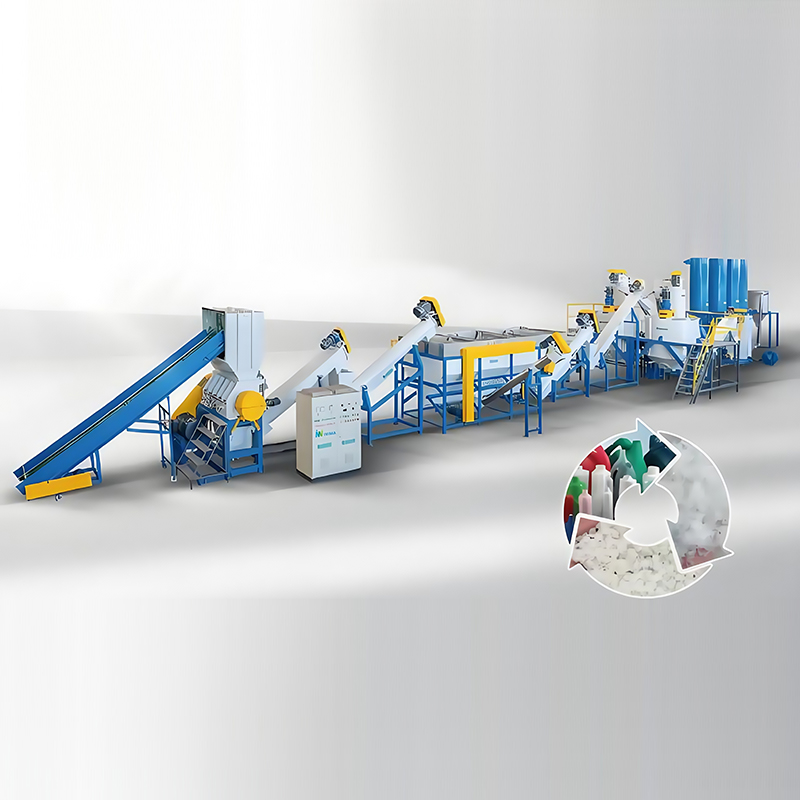
Operating a recycling facility requires strict capital management and sharp operational strategies. You often face a tough business dilemma when scaling up operations. Recyclers naturally want to maximize capital efficiency. Processing multiple polymer types on a single plastic bottle washing line seems like an ideal solution to save money. The appeal of maximizing equipment utilization drives many to explore hybrid machinery setups.
While this sounds great on paper, the operational reality tells a different story. You can technically run both PET and HDPE through the same system. However, their fundamental physical and chemical differences require significant workflow compromises. Ignoring these material properties often leads to severe cross-contamination. Mixing polymers drastically reduces the market value of your final recycled flakes.
This article evaluates the engineering trade-offs of running a dual-purpose system. We will explore the severe cross-contamination risks and ROI implications. You will learn how hybrid systems compare against investing in dedicated lines. This guide helps you balance upfront machinery costs against long-term operational efficiency.
Physics dictate the process: PET sinks (density ~1.38 g/cm³) while HDPE floats (density ~0.95 g/cm³), requiring entirely different separation tank configurations.
Contamination is a margin-killer: Switching between polymers on one line requires rigorous, time-consuming cleanouts to prevent high-value PET flakes from being ruined by HDPE residue (and vice versa).
Temperature and chemical conflicts: A dedicated PET bottle washing line requires aggressive hot washing (85–90°C with NaOH) to remove glues, which is often overkill and energy-inefficient for HDPE.
The volume threshold: Hybrid lines only make financial sense for low-throughput operations; high-capacity plants achieve faster ROI with parallel, dedicated lines.
You cannot cheat physics when processing plastics. PET and HDPE behave completely differently in water, react differently to heat, and carry different waste residues. Understanding these core material differences is crucial before designing a facility.
Density dictates how separation tanks function. Pure water has a density of exactly 1.0 g/cm³. PET has a density of around 1.38 g/cm³. Because it is heavier than water, it sinks quickly to the bottom. Conversely, HDPE has a density of approximately 0.95 g/cm³. It is lighter than water, so it floats on the surface.
This sink-float mechanic creates a major equipment challenge. A standard separation tank cannot efficiently process both materials simultaneously. To collect PET, a machine uses heavy-duty bottom augers to drag the sinking flakes out. To collect HDPE, the machine uses rotating top paddles to skim flakes off the surface. Reconfiguring a single tank to alternate between bottom extraction and top skimming requires major mechanical intervention.
Each polymer attracts distinct types of post-consumer waste. They require completely different chemical attacks to achieve a clean flake.
PET Contaminants: These bottles usually hold sugary beverages or water. Their main contaminant challenge comes from stubborn wrap-around labels and aggressive adhesives. Removing these glues requires intense chemical friction.
HDPE Contaminants: These containers typically hold milk, laundry detergents, or motor oil. They deal heavily with residual fats, proteins, and chemical surfactants.
Using the exact same detergent mix for both materials wastes money. Oil residues need specific degreasers. Label adhesives need strong caustic soda (NaOH). A dual line forces you to constantly drain and swap expensive chemical baths.
Heat plays a vital role in cleaning plastic, but too much heat destroys certain polymers. PET requires high-temperature friction washing. You typically wash PET at 85–90°C to achieve food-grade rPET standards. This high heat melts the adhesives and sterilizes the flake.
HDPE has a much lower thermal tolerance. It begins to soften and curl at high temperatures. Running HDPE through a boiling hot wash degrades the plastic. Furthermore, heating massive volumes of water to 90°C for HDPE wastes enormous amounts of thermal energy. Different thermal washing requirements make it difficult to find a single temperature setting suitable for both plastics.
Despite their differences, some machinery handles both polymers perfectly well. Recognizing where plastic recycling equipment overlaps helps you identify true system bottlenecks.
The initial stages of a recycling plant are relatively polymer-agnostic. Bale breaking, trommel screens, and magnetic separators can handle both materials without any modification. Dirt, rocks, and stray metal behave the same regardless of the plastic type surrounding them.
Wet crushers and granulators can also physically shred both polymers. However, operators usually need to make slight adjustments. Screen sizes and blade gaps often require tweaking for optimal flake geometry. PET is highly brittle, while HDPE is more ductile and prone to tearing. You might need a 14mm screen for PET and a 16mm screen for HDPE to achieve perfect throughput.
Once the material moves past the shredding phase, the equipment compatibility ends abruptly. The washing phases present severe mechanical conflicts.
Sink-Float Tanks: This remains the core conflict in a hybrid facility. Extracting sinking PET requires a discharge auger placed at the very bottom of a V-shaped tank. Extracting floating HDPE requires top-mounted skimmers and a side discharge chute. If you push floating HDPE through a bottom-discharge tank, it simply builds up on the water surface and eventually jams the machine.
Hot Washers: Dosing systems for caustic soda and detergents must be recalibrated for every material switch. Running HDPE through a PET-optimized hot wash wastes both thermal energy and chemical inputs. The aggressive agitation used for PET can also cause lighter HDPE flakes to fold or roll into tight cylinders. These curled flakes trap moisture and ruin the drying phase.
Running a dual-purpose line is not just a mechanical challenge; it poses serious daily operational risks. Financial penalties add up quickly if operators are not meticulous.
Cross-contamination destroys profit margins. Trace amounts of HDPE in a batch of PET flake carry a severe financial penalty. When manufacturers melt PET to make new bottles, they operate extruders at roughly 260°C. HDPE melts at around 130°C.
If HDPE slips into a PET batch, the HDPE completely burns and chars inside the extruder. This creates black carbon spots in the final plastic product. It also causes structural failures during the blow-molding process. Buyers will reject entire shipping containers of your rPET flake if they detect even tiny percentages of HDPE contamination.
Switching a hybrid line from one material to another is painful. It requires immense labor and results in lost production hours. You cannot simply press a button to switch from PET to HDPE.
Operators must thoroughly purge the entire line to guarantee zero cross-contamination. This involves:
Emptying all hoppers and feed conveyors.
Opening granulators to vacuum out stuck plastic shards.
Draining and scrubbing hot friction washers.
Flushing sink-float tanks to remove suspended particles.
Sweeping out thermal dryers and bagging silos.
This purge process usually kills an entire operational shift. Every hour spent cleaning is an hour of lost revenue.
Operating a dual-line requires batch processing rather than continuous feeding. You must stockpile one material while processing the other. This stop-and-start workflow inherently caps the facility's total monthly tonnage.
Continuous feed systems are always more profitable. Constant running stabilizes electrical loads, chemical dosing, and heat retention. Batch processing disrupts this stability. You lose precious hours getting the hot washers back up to temperature after every changeover.
Deciding between a hybrid system and dedicated lines comes down to evaluating capital expenditures (CapEx) against operating expenses (OpEx). Different business models require different approaches.
Processing Scenarios: Hybrid vs. Dedicated Lines
Operational Metric | Hybrid System (Single Line) | Dedicated Systems (Parallel Lines) |
|---|---|---|
Upfront Cost (CapEx) | Lower initial equipment investment. | Higher initial investment for dual machinery. |
Changeover Labor | High. Requires 4-8 hours per material swap. | Zero. Lines run continuously without swaps. |
Contamination Risk | High. Relies heavily on manual cleaning. | Low. Materials remain physically isolated. |
Energy Efficiency | Poor. Heat lost during batch transitions. | Excellent. Steady-state temperatures maintained. |
A hybrid line sometimes makes perfect sense for smaller operations. If you process under 1,000 tons per month, you likely face limited initial capital and facility space constraints. Purchasing two separate massive lines might bankrupt a startup.
To succeed here, you need a specific mindset. You must accept higher labor costs for batch changeovers. You must implement extremely stringent quality control measures. Startups survive on hybrid lines by processing PET for two weeks straight, executing a deep clean over the weekend, and processing HDPE the following two weeks.
Industrial facilities operating at high capacities face different math. If you process thousands of tons monthly, running a dedicated PET bottle washing line alongside a dedicated HDPE bottle washing line always yields better ROI.
Parallel lines drastically lower your operational expenditures. Continuous running optimizes energy use, as hot washers never lose their heat. Zero changeover downtime means you maximize output every single day. The higher initial equipment cost pays for itself rapidly through increased tonnage and flawless flake purity.
If capital or space limits force you to build a dual-purpose line, you must engineer it carefully. Standard setups will fail. You need customized modifications to mitigate the risks.
Smart engineers design hybrid lines with Y-valves and bypass chutes. Because HDPE does not need extreme high-temperature washing, you can route it away from the PET hot washer entirely.
When running HDPE, operators switch a heavy-duty pneumatic valve. The material bypasses the boiling caustic tanks and routes directly into a standard friction washer. This saves massive amounts of electricity and protects the HDPE flakes from heat degradation.
If you process both polymers, you need advanced separation tanks. Standard tanks only extract in one direction. Modern hybrid facilities utilize dual-discharge sink-float tanks.
These specialized tanks extract both top-floating and bottom-sinking materials. They feature variable speed drives (VSDs) on both the surface paddles and the bottom augers. When running PET, you maximize the bottom auger speed. When running HDPE, you activate the surface skimmers. These tanks are more expensive but absolutely essential for hybrid operations.
Human error is the biggest threat in a hybrid plant. Relying on operators to manually adjust dozens of dials during a changeover guarantees mistakes. You need centralized, automated controls.
Invest in Programmable Logic Controller (PLC) systems with pre-programmed modes. Your central touchscreen should feature a distinct "PET Mode" and "HDPE Mode." Tapping these buttons automatically adjusts friction washer speeds, thermal dryer temperatures, and chemical dosing pumps. Automation ensures every batch runs under the exact right physical parameters.
Finding the right balance between equipment flexibility and processing purity is a tough challenge. Based on the engineering realities, one single line certainly can wash both PET and HDPE. However, it should not be the default choice for growth-focused operations. The hidden costs of cross-contamination and changeover downtime quickly erase upfront capital savings.
We recommend making your procurement decision based on verified feedstock volumes and strict end-buyer purity requirements. If you plan to scale beyond a regional startup, invest in dedicated parallel lines. Dedicated systems guarantee lower operational expenses and premium flake quality over the long run.
Before purchasing machinery, audit your specific material streams. Consult with experienced equipment engineers to design a facility layout that maximizes throughput while protecting your profit margins.
A: No. They must be sorted prior to granulation. Mixed processing results in an unsellable, co-mingled flake. Their different densities and melting points make it impossible to separate and process them effectively once shredded together.
A: Generally, yes. HDPE lines often require less aggressive thermal and chemical washing stages. This lowers both initial equipment costs and ongoing energy consumption. They rarely need the heavy-duty boilers required for PET glues.
A: Depending on the line's capacity and design, a thorough purge to ensure zero cross-contamination typically takes 4 to 8 hours of downtime. You must drain tanks, clean pipes, and vacuum all drying equipment.
A: Yes. Subjecting HDPE to the extreme heat (90°C+) and high caustic concentrations used for PET can lead to material degradation. The flakes often curl, trap moisture, and rack up unnecessary utility costs.