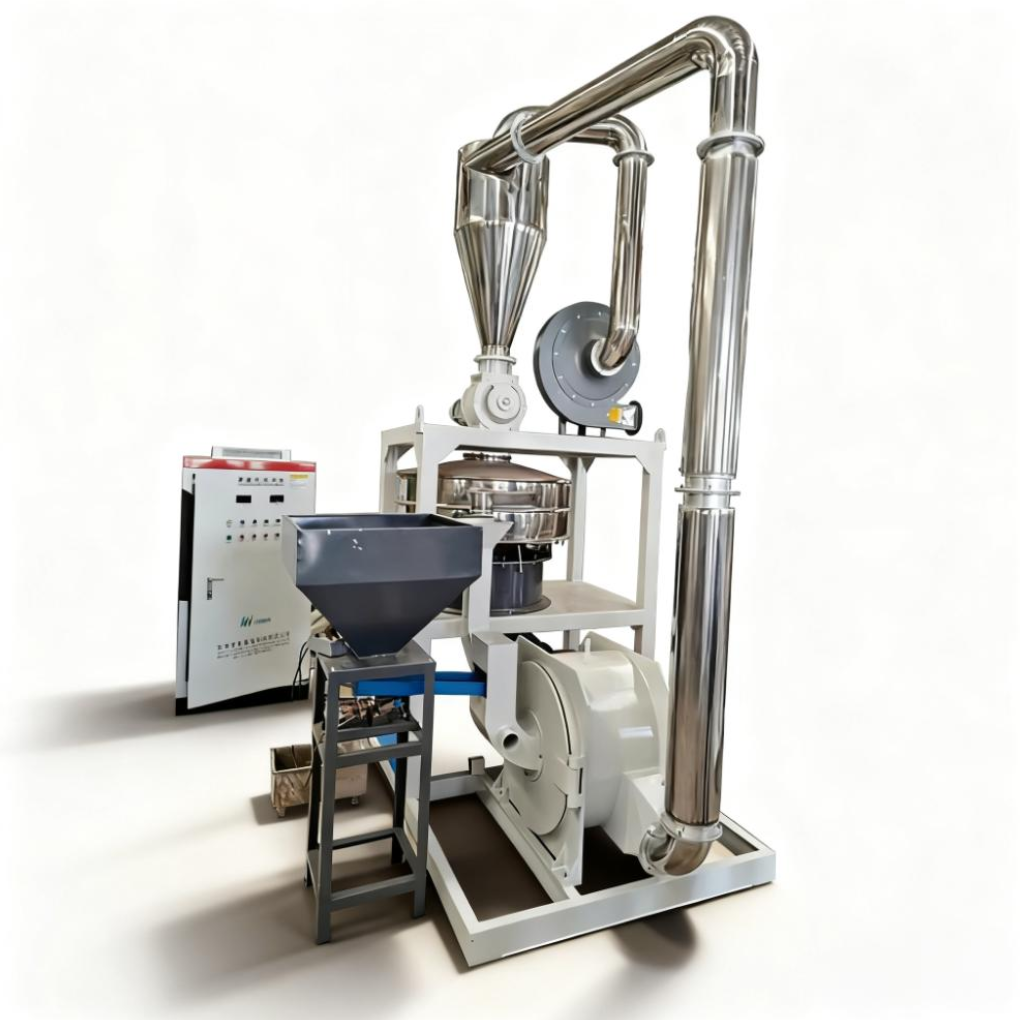
Views: 0 Author: Site Editor Publish Time: 2026-11-16 Origin: Site
Overheating in PVC milling operations destroys both product quality and overall profitability. When grinding temperatures exceed safe operational limits, you face immediate material degradation, forced machine downtime, and severely compromised output quality. Facility managers simply cannot afford to ignore these sudden thermal spikes. However, overheating rarely stems from a single isolated component failure. You will typically find it is a systemic issue driven by excessive mechanical friction, restricted internal airflow, or erratic feed rates. Resolving these temperature spikes requires a holistic look at your entire milling system.
This guide provides a practical diagnostic framework for plant managers, maintenance engineers, and technicians. We will help you troubleshoot and resolve thermal issues effectively before you consider an expensive hardware replacement. Read on to discover the exact mechanical checks, clearance adjustments, and airflow audits necessary to stabilize your milling temperatures and keep production running smoothly.
Material integrity is the first casualty: Sustained high temperatures cause PVC discoloration, clumping, and blocked screens.
Blade clearance is critical: Improper gaps between stationary and rotary blades are the leading cause of excessive frictional heat.
Cooling systems require active auditing: Water jacket scaling and inadequate cyclone airflow drastically reduce thermal dissipation.
Upstream consistency matters: Irregular flake sizes from a plastic scrap crusher will force the pulverizer into inefficient, high-friction load cycles.
Operating a milling system beyond safe thermal limits carries severe financial and operational penalties. Thermal degradation in PVC powder processing leads directly to wasted material batches. It also drives up power consumption and accelerates tool wear across the board. You lose money on scrapped materials while paying significantly more in electricity and replacement parts. When PVC burns or degrades inside the chamber, the resulting cleanup forces your maintenance team to halt production for hours.
Optimal milling requires maintaining high hourly throughput. At the same time, you must keep the grinding chamber temperature well below the PVC glass transition point. Rigid PVC typically begins to soften around 80°C to 85°C. If internal temperatures approach this limit, the PVC softens and smears against the cutting surfaces instead of fracturing into a fine powder. This smearing action instantly destroys your yield.
How do you separate normal operational heat from critical overheating? You must watch for distinct warning signs. Look for sudden, erratic amperage spikes on your main control panel. Operators on the floor might notice a sharp, distinct acidic odor, which strongly indicates PVC degradation. You will also see powder aggregation, where the output clumps together instead of flowing freely into the collection bins.
Thermal Symptom Comparison Chart
Indicator | Normal Operation | Critical Overheating |
|---|---|---|
Motor Amperage | Stable, remaining within rated OEM limits | Erratic spikes, sustained high electrical draw |
Material Flow | Free-flowing, uniform powder discharge | Clumping, aggregation, and frequently blocked screens |
Odor | Neutral, standard plastic processing smell | Sharp, acidic smell denoting chemical degradation |
Chamber Heat | Warm to the touch, managed via cooling jacket | Excessive heat radiating outward rapidly, too hot to touch |
When your PVC pulverizer machine runs hot, always start with mechanical fundamentals. Triage the primary drive system first before investigating complex airflow dynamics. Mechanical drag is one of the most efficient generators of unwanted heat.
Begin by checking the drive motor and bearing assemblies. Look closely for bearing lubrication breakdown. Dry, contaminated, or worn bearings create immense mechanical drag. This drag converts motor energy directly into heat rather than rotational force. Also, meticulously inspect your drive belts. Over-tensioned belts put severe radial strain on the rotor bearings, while loose belts slip against the pulleys and generate intense surface friction.
Next, evaluate the rotor balance. Identify any abnormal vibrations transmitting through the machine frame. A vibrating machine almost always points to an off-balance rotor or a damaged cutting disc. An unbalanced rotor forces the bearings to absorb massive, uneven loads at high RPMs. This mechanical stress contributes heavily to both rapid heat generation and premature bearing failure.
You must understand the realities of mechanical implementation. Simply pumping new lithium grease into the bearing housings will not solve overheating. If the underlying load distribution remains uneven, or if the rotor remains unbalanced, the frictional heat will return immediately. You must correct the mechanical alignment and balance issues first to achieve long-term thermal stability.
The physical gap between your cutting elements dictates your final powder fineness. More importantly, it directly controls internal heat generation. Proper clearance adjustment is absolutely non-negotiable for thermal management.
If the blades sit too tight, you create excessive shear friction. This causes immediate overheating and introduces a severe risk of catastrophic blade collision. You must remember thermal expansion. As the steel blades and rotor heat up during standard operation, the metal expands. A gap measured when the machine is cold will shrink considerably once the mill reaches operating temperatures. If you set the cold gap too tight, the expanding metal will close the gap entirely, leading to sparks, extreme heat, and shattered tooling.
Conversely, if the gap is too loose, material remains inside the grinding chamber too long. The PVC particles circle endlessly without fracturing small enough to exit the classification screen. This extended residence time causes severe frictional heat buildup as the material continuously rubs against itself and the chamber walls. It also drastically reduces your hourly throughput volume.
Follow these established best practices for clearance adjustments:
Isolate the main power supply to ensure complete operator safety before opening the chamber.
Thoroughly clean all residual powder from the cutting elements to ensure accurate gap measurements.
Use a calibrated feeler gauge to measure the gap between the stationary and rotary blades. Never rely on visual estimates.
Adjust the locking nuts carefully until the gap meets the specific OEM recommendation for your exact PVC formulation.
Document these baseline settings in a dedicated maintenance logbook. Rigid PVC formulations generally require different clearances than flexible PVC compounds.
Rotate the main shaft manually by hand to confirm there is zero physical contact between moving parts before engaging the motor.
Industrial cooling systems prevent thermal runaway during continuous milling. They handle heavy thermal loads but demand active, scheduled auditing to function correctly.
Start by evaluating the water cooling jackets surrounding the mill chamber. Assess the inlet and outlet temperature differentials. Water should enter the system cool and exit noticeably warmer. If the inlet and outlet temperatures match, your cooling jacket is failing to absorb heat. We frequently encounter a hidden risk here: severe mineral scaling. Facilities using hard water will accumulate thick mineral deposits inside the cooling jacket. This internal scale acts as a powerful thermal insulator. It completely neutralizes the cooling effect, even if water appears to flow freely through the pipes.
Next, inspect the cyclone and induced draft fans. Airflow inside a milling system performs two critical jobs simultaneously. It physically transports the milled material out of the chamber, and it extracts internal heat. Inspect your entire pneumatic system for blocked screens, collapsed hoses, or leaking seals. A leaking seal drops the internal air velocity drastically. Ensure your blower fans are not undersized for your target production volume.
Many plant managers fall into a common trap. They assume adding a larger industrial chiller unit will instantly solve their thermal issues. This is often an expensive, ineffective band-aid. If internal chamber airflow remains structurally obstructed, pumping freezing water around the outside jacket cannot rescue the process. You must fix the internal airflow restrictions first to extract the heat efficiently.
You cannot isolate the pulverizer from the rest of your production line. Pulverizer efficiency links directly to the quality and consistency of the material supplied upstream. The condition of your incoming material defines the baseline workload for the mill.
If your plastic scrap crusher delivers irregular, oversized flakes, it forces the pulverizer to work significantly harder. The mill struggles to process sudden influxes of massive, uneven loads. This creates inefficient, high-friction load cycles. The rotor speeds up and bogs down erratically. Consistent input size guarantees consistent milling temperatures.
Inspect your crusher blades weekly to ensure they deliver a uniform, predictable flake size.
Filter out excessive fines or oversized chunks using a vibratory sieve before the material reaches the pulverizer hopper.
Ensure the bulk density of the incoming material remains relatively constant to prevent volumetric feeding errors.
Manual or inconsistent feeding invites thermal disaster. Dump-feeding material spikes the motor load instantly. You should evaluate vibratory or screw feeders instead. Synchronize these automated feeders with the main motor amperage using an integrated control loop. If the pulverizer motor draws too much power, the feeder should automatically slow down or pause to prevent chamber choking.
Respect the operational reality of your equipment. Pushing the machine beyond its true volumetric capacity limits causes immediate trouble. Overfeeding reduces particle exit speed. Material piles up inside the screen area, trapping intense heat within the milling zone. Honor the machine's stated capacity limits to maintain long-term thermal stability.
Sometimes, rigorous mechanical adjustments are simply not enough. If adjustments fail to lower temperatures without sacrificing your required yield, you face a hard operational truth. Your existing equipment might be fundamentally undersized for your current production targets. Running a small machine at 110% capacity will always result in chronic overheating.
When shortlisting new equipment, focus on engineering features that actively manage thermal loads. Use the following key evaluation lenses:
Advanced Rotor Designs: Carefully assess the differences between traditional disc mills and modern turbo-mill designs. Turbo-mills generate significant internal turbulence. This turbulence creates superior internal airflow, resulting in much better heat dissipation for heat-sensitive plastics like PVC.
Automated Temperature Controls: Look for smart, responsive control systems. Modern mills feature automatic water cooling triggers that open solenoid valves only when temperatures cross a specific threshold. Furthermore, they utilize variable-frequency drive (VFD) feeders managed by a PLC. These advanced feeders self-adjust based on real-time motor loads, entirely eliminating human feeding errors.
Compliance and Safety: Ensure any new system meets current industrial dust and thermal safety standards. Processing hot PVC dust presents severe combustion and respiratory risks. Modern safety features, including explosion vents and automated thermal shut-offs, protect your facility and your operators from catastrophic accidents.
Resolving severe thermal issues in PVC milling requires a disciplined, systematic approach. Start by checking your upstream feed consistency to ensure uniform material enters the hopper. Next, meticulously adjust your mechanical clearances using precise feeler gauges to minimize internal shear friction. After that, audit your cooling lines for scale and check your airflow pathways for hidden pneumatic obstructions. Finally, objectively evaluate the absolute production capacity of your machine.
Encourage your floor operators and maintenance teams to document every adjustment systematically. Track exactly what works and what fails during different production runs. If thermal limits continue to restrict your production scalability despite perfect maintenance, consult directly with equipment engineers. They can analyze your throughput data and help determine if a strategic capacity upgrade is the most profitable path forward for your facility.
A: OEM guidelines generally recommend keeping the internal grinding chamber temperature below 80°C for PVC processing. If temperatures exceed this threshold, the PVC reaches its glass transition phase. It will begin to soften, discolor, and clump together rapidly. Monitoring this threshold prevents severe thermal degradation and protects your equipment from sudden screen blockages.
A: Yes, absolutely. A dull blade tears and crushes the plastic material rather than cutting it cleanly. Tearing requires significantly more mechanical force. This exponentially increases friction inside the chamber. As internal friction rises, your main motor draws more amperage, and chamber heat spikes rapidly. Keeping blades sharp is crucial for effective thermal management.
A: Maintenance frequency depends heavily on your local water hardness and daily operational hours. In areas with hard water, you should descale the cooling jacket chemically every three to six months. If you operate continuously or notice the inlet-outlet temperature differential dropping, increase this frequency. Regular descaling ensures consistent, uninterrupted thermal transfer.
A: It significantly impacts internal temperature. Oversized or highly irregular input flakes require much more mechanical force to grind down. They also require a much longer residence time inside the pulverizing chamber. This prolonged processing directly increases the thermal load on the equipment. Consistent, appropriately sized input prevents dangerous heat buildup.