


Views: 0 Author: Site Editor Publish Time: 2025-12-11 Origin: Site

In the world of industrial fluid transfer and irrigation systems, the PVC Lay‑Flat Hose Machine stands as a crucial piece of equipment that enables efficient production of flexible, durable, and high‑performance PVC lay‑flat hoses. These hoses have widespread applications, from agricultural irrigation systems to industrial dewatering lines, and their manufacturing requires advanced PVC Lay‑Flat Hose Production Equipment with precise control and robust engineering.
This article will provide a comprehensive introduction to the core technology behind the PVC Lay‑Flat Hose Machine, with data‑oriented insights, product comparisons, and practical considerations for manufacturers looking to invest in laying a solid foundation for hose production operations.
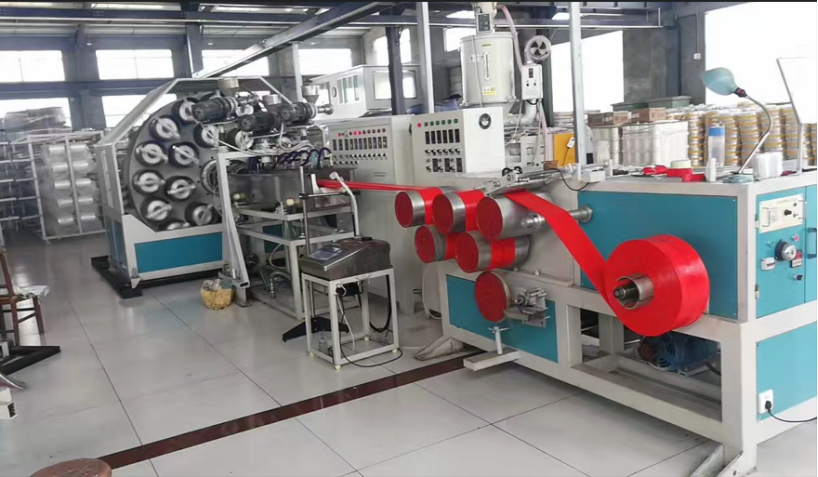
A PVC Lay‑Flat Hose Machine is a specialized manufacturing system designed to produce flat, flexible hoses made primarily of polyvinyl chloride (PVC) materials. Unlike rigid pipes, these hoses remain flat when not in use and expand into cylindrical form when pressurized with fluid. The production line typically includes an extruder, braiding machine, cooling section, haul‑off unit, and winder—all coordinated to achieve consistent quality and high output efficiency.
At its core, this machine implements plastic extrusion technology, where PVC compound pellets are melted, homogenized, and forced through a die to form a continuous hose profile. This technology allows manufacturers to create hoses with controlled wall thickness, reinforcement integration, and consistent performance characteristics.
The PVC Lay‑Flat Hose Production Equipment integrates several advanced technologies to ensure high quality, flexibility, and durability of the finished hose product. Below are the core technologies embedded within the operation:
An extrusion line is at the heart of the PVC Lay‑Flat Hose Machine, enabling precise melting and shaping of PVC materials. The extruder includes a screw and barrel that convey, heat, and plasticize PVC resin into a homogeneous melt before forcing it through a die. These extruders often incorporate:
| Component | Function |
|---|---|
| Screw & Barrel | Plasticize and homogenize PVC |
| Die Head | Shapes the molten PVC into hose profile |
| Temperature Control | Ensures consistent melt and quality |
| Vacuum Calibration Tank | Controls dimensional stability |
Reinforcement is essential for high‑pressure performance. Many industrial lay‑flat hoses embed polyester fibers, creating a reinforced structure that resists internal pressure and improves tensile strength.
After extrusion, the hose passes through a cooling section (water or ambient) to stabilize the hose geometry and solidify the plastic layer.
To maintain uniform tension and accommodate different production speeds, automated haul‑off and winding units are essential. They allow fast reel changes, higher line speeds, and reduced manual intervention—key for efficient mass production.
Modern systems often integrate sensors and feedback loops to monitor extrusion parameters and detect defects. Automated quality management enhances product consistency and reduces waste.
The combined effect of these technologies results in hose products that are lightweight, bendable, and durable—meeting a broad range of end‑user expectations in irrigation, flood control, and industrial fluid transfer applications.
To understand the significance of PVC Lay‑Flat Hose Machines, it’s important to compare the outcomes they produce with other fluid conveyance options on the market.
| Characteristic | PVC Lay‑Flat Hose | Rigid Pipe |
|---|---|---|
| Flexibility | High | Low |
| Transport & Storage | Flat and compact | Bulky |
| Set‑up time | Fast deployment | Requires fittings & welding |
| Best Use | Temporary or mobile systems | Permanent installations |
| Example Materials | PVC reinforced hose | HDPE or other rigid plastics |
PVC lay‑flat hoses are more adaptable to changing operation sites, whereas traditional rigid pipes excel in long‑term fixed installations.
Several lay‑flat hoses are manufactured from materials like rubber and TPU. PVC versions are widely adopted due to their cost‑effectiveness and resistance properties.
| Material | Durability | Flexibility at Low Temp |
|---|---|---|
| PVC | Moderate | Stiffens |
| TPU | High | Excellent |
| Rubber | High | Moderate |
Here, PVC lay‑flat hoses provide good chemical resistance and cost benefits, making them suitable for many general industrial and irrigation use cases.
A deep dive into production parameters often helps manufacturers optimize equipment selection. Below is a comparison of typical PVC lay‑flat production lines:
| Model (Representative) | Hose Diameter Range | Power (kW) | Line Speed (m/min) |
|---|---|---|---|
| Small/Entry Line | 25 – 75 mm | 30 – 40 | 5 – 10 |
| Mid‑Size Industrial | 75 – 132 mm | 37 – 55 | 10 – 15 |
| Large Scale High Capacity | 100 – 200 mm | 50 + | 12 – 18 |
These configurations show how production scale affects power requirement and line speed, directly influencing manufacturing throughput and final cost per meter.
Consistent monitoring of these parameters helps manufacturers achieve a balance between output and quality—especially when integrating reinforcement or multi‑layer PVC materials.
As production technology advances, the PVC Lay‑Flat Hose Machine converges with broader plastic pipe machine systems and modern smart manufacturing practices.
Plastic pipe machines and PVC lay‑flat hose lines both leverage extrusion technology, allowing shared infrastructure such as material feeders, temperature control systems, and automation platforms. This synergy can reduce training overhead and streamline maintenance teams.
By integrating sensors, PLC control systems, and cloud‑based analytics, manufacturers can:
Track machine performance in real time
Predict maintenance requirements
Improve quality control
This not only enhances manufacturing efficiency but also reduces downtime—a critical advantage in high‑volume production environments.
The future of PVC Lay‑Flat Hose Production Equipment is shaped by evolving customer demands and industry trends:
Some competitors are exploring alternative materials such as recyclable polyolefin compounds for layflat hoses. These trends might influence future machine designs to handle different raw materials.
End users increasingly demand bespoke hoses tailored for specific applications—whether in agricultural irrigation, firefighting, or industrial fluid delivery. Flexible production lines capable of multi‑layer extrusion or integrated fittings are becoming more relevant.
Adopting Industry 4.0 technologies enables remote diagnostics, predictive maintenance, and finer production control—pushing older analog systems toward obsolescence.
In the competitive landscape of fluid conveyance systems, the PVC Lay‑Flat Hose Machine represents a strategic investment for manufacturers focused on flexibility, scalability, and product quality. By incorporating advanced extrusion technology, reinforcement integration, and automated control systems, these machines deliver significant value in producing hoses for diverse markets.
Key takeaways:
✔ PVC lay‑flat hoses are flexible and cost‑effective alternatives to rigid pipes in many applications.
✔ Production relies heavily on modern extrusion and automation technologies.
✔ Data‑driven configuration helps balance production efficiency and reliability.
✔ Integration with Industry 4.0 and plastic pipe machine ecosystems enhances operational intelligence.
As global demand for efficient water transfer systems continues to grow, mastering the technologies behind PVC Lay‑Flat Hose Production Equipment will be central to maintaining competitive advantage.
PVC lay‑flat hoses remain flexible and can be rolled flat, whereas traditional PVC pipes are rigid and used for permanent pipeline installations.
Some advanced systems may be adapted to process other thermoplastic materials, but most are optimized for PVC with reinforcement integration.
Common applications include agricultural irrigation, firefighting water transfer, industrial fluid delivery, and dewatering operations.
Reinforcement fibers such as polyester mesh enhance pressure resistance and tensile strength, allowing hoses to withstand higher internal pressures.
Automation increases consistency, reduces waste, and allows real‑time quality monitoring to ensure high‑volume, reliable production.


