Views: 0 Author: Site Editor Publish Time: 2026-08-03 Origin: Site

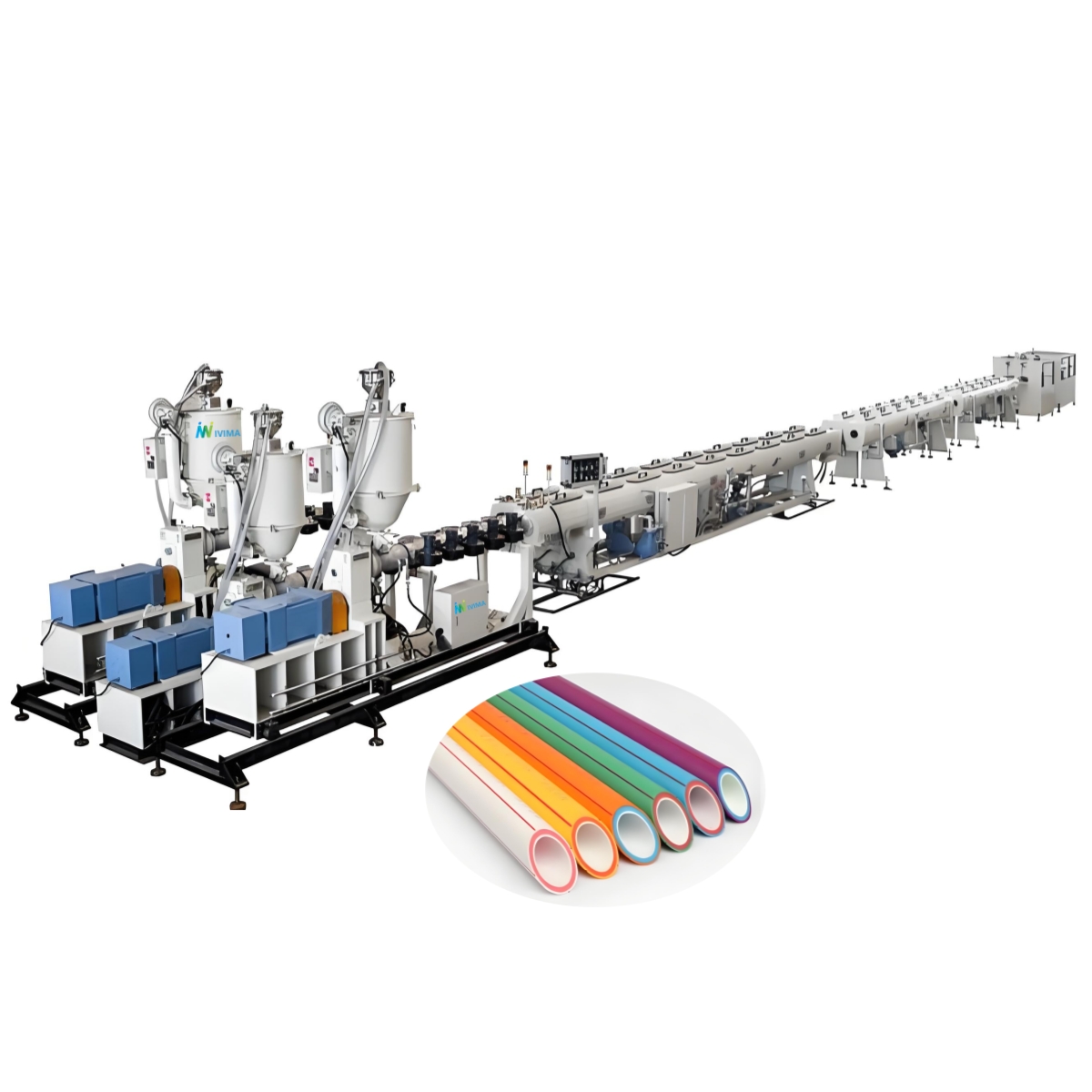
In plastic pipe manufacturing, raw materials account for up to 80% of total operational costs. When producing PPR (Polypropylene Random Copolymer) pipes, relying on manual adjustments or outdated machinery to control wall thickness is a margin-killing liability. Over-extrusion wastes expensive resin unnecessarily. Meanwhile, under-extrusion results in pipes failing DIN 8077/8078 pressure rating (PN) standards. This failure leads directly to rejected batches.
For production managers evaluating a new PPR pipe extrusion line, understanding precise control mechanisms is essential. You will discover how synchronized automation, die head mechanics, and ultrasonic monitoring guarantee uniform dimensions. We explore the physical foundation of accuracy to streamline your equipment selection and safeguard your production margins.
Material Savings Pay for Automation: Precision control systems (like gravimetric dosing) directly reduce resin waste, often achieving ROI on the upgrade within months.
Closed-Loop Synchronization is Mandatory: Consistent wall thickness requires real-time data exchange between the extruder RPM, haul-off unit, and ultrasonic measuring devices.
Die Head and Calibration Synergy: Mechanical precision in the spiral die head and stable vacuum calibration are the physical foundations of dimensional accuracy.
Evaluation Criteria: When shortlisting machinery, buyers must prioritize closed-loop PLC integration over standalone mechanical components.
Every millimeter dictates your bottom line. A variance of just 0.2mm to 0.5mm above standard specifications consumes vastly more resin annually. You pay for plastic you do not need. Over months of continuous operation, this small error compounds aggressively. It eats into your profit margins heavily. Modern facilities simply cannot afford arbitrary material consumption. Precise dimensional control ensures you yield the maximum length of pipe per ton of resin.
Wall thickness directly dictates pressure resistance capabilities. You must meet specific ratings like PN16, PN20, or PN25 for plumbing applications. If pipes run too thin, they fail high-temperature water pressure tests. Failing these tolerances risks structural failure in residential or commercial plumbing setups. You also face strict non-compliance penalties regarding international standards. Quality control auditors will reject entire batches if they spot localized thinning. Consistency guarantees compliance.
Startup phases traditionally produce excessive scrap. A modern PPR pipe production line minimizes this expensive waste. Automated systems reach target thickness much faster than legacy systems. You stop throwing away good material during machine calibration. Operators input the desired parameters, and the system auto-tunes itself swiftly. Faster startup times translate directly to higher overall equipment effectiveness (OEE).
Continuous material weighing is absolutely vital. Gravimetric feeders weigh the raw resin entering the extruder constantly. They monitor material bulk density in real time using highly sensitive load cells. If bulk density changes, the system reacts immediately. It automatically adjusts the extruder screw RPM. Alternatively, it adjusts the downstream haul-off speed. This synchronicity maintains a constant gram-per-meter output. You get mathematical precision instead of relying on volumetric estimates.
The die head shapes the molten plastic into a pipe profile. A spiral mandrel die head ensures uniform melt distribution across the entire circumference. It eliminates flow marks effectively. This prevents localized thin spots in the finished pipe wall. Thermal stability is equally critical here. Manufacturers use high-grade steel like 40Cr or 38CrMoAl for die construction. These robust materials prevent heat-induced deformation. Your die maintains strict mechanical precision under extreme heat and pressure.
Cooling sets the shape permanently. The sizing sleeve, or calibrator, sits inside the primary vacuum tank. It dictates the exact outer diameter. This component works in tandem with internal pressure. Together, they set the final wall thickness. You must maintain stable vacuum pressure levels continuously. Consistent water temperature is also vital for uniform cooling. These factors prevent unpredictable plastic shrinkage, a phenomenon commonly known as die swell.
Extrusion volume and pulling speed must align perfectly. You face a critical physical relationship between these two metrics. The haul-off caterpillar pulls the hot pipe through the cooling tanks. A fraction of a second of lag alters wall thickness instantly. Surges cause the pipe to thin out. Lags cause the pipe to thicken. Advanced synchronization locks these two speeds together electronically. This prevents any dimensional drift during steady-state production.
Extrusion Process Variables and Impact Matrix
Process Variable | Impact on Wall Thickness | Mitigation Strategy |
|---|---|---|
Resin Bulk Density Shift | Changes output volume, causing thick/thin sections. | Deploy gravimetric weight-per-meter dosing units. |
Die Head Temperature Fluctuation | Alters melt flow viscosity, creating uneven distribution. | Use high-grade steel dies and multi-zone PID temperature controllers. |
Haul-off Belt Slippage | Creates sudden surges or lags, resulting in dimensional waves. | Install servo-driven motors and synchronized PLC drives. |
Vacuum Pressure Drops | Fails to hold outer diameter, warping internal thickness. | Perform regular sizing sleeve cleaning and monitor water pumps. |
Offline measuring relies heavily on post-production cutting. You cut a cooled pipe segment, measure it manually, and adjust machinery settings. This traditional method is terribly slow. You produce dozens of meters of scrap before realizing the error. Manual calipers only offer historical data. They do not provide real-time operational control. Relying on them exposes your production run to undetected, prolonged dimensional drifting.
Inline ultrasonic scanners provide continuous, non-destructive measurement. They scan the pipe continuously across a full 360 degrees as it exits the cooling tank. Sound waves bounce through the polymer layers continuously. The sensors measure the exact distance between the inner and outer walls. You get instant, precise dimensional data for the entire pipe circumference. This eliminates guesswork entirely.
Gathering data is only the first step. Ultrasonic data feeds directly into the central PLC (Programmable Logic Controller). The PLC analyzes this data stream constantly. If the pipe drifts toward minimum tolerance limits, the system reacts. It automatically micro-adjusts the haul-off speed. It might also adjust the extruder screw RPM simultaneously. This happens instantly, without human intervention. Your operators monitor the results rather than chasing mechanical dials.
You must assess the central control system before buying a plastic pipe machine. Does the manufacturer use isolated controls? Avoid them. Seek a unified system from tier-one brands like Siemens or B&R. In unified architectures, the dosing unit, extruder, and haul-off communicate seamlessly. They share operational data in milliseconds. This rapid communication forms the backbone of responsive thickness control.
Operating multiple extrusion lines requires standard control logic. Evaluate if the digital interface is consistent across vendor models. Your operators should transition easily. They might move between this machine and an HDPE pipe extrusion line in the morning. They might operate a PVC pipe extrusion line the next day. Standardized PLC screens reduce training time significantly. They also minimize costly human errors during setup.
Demand written performance metrics from suppliers. Look for vendors willing to state achievable thickness tolerances openly. They should guarantee tight metrics, such as ±0.1mm, in their performance contracts. Ensure they specify the required resin conditions for these tests. Vague promises lead to operational headaches later. Legitimate manufacturers possess the engineering confidence to guarantee their dimensional accuracy in writing.
Factory voltage fluctuations disrupt machinery operations. Evaluate the machine's electrical resilience carefully. Voltage drops can slow down haul-off drives momentarily. This alters wall thickness instantly. High-quality inverters regulate power inputs effectively. They shield the delicate extrusion process from local grid instability. Reliable electrical components ensure your closed-loop systems function optimally.
PPR melt naturally expands upon exiting the die head. This expansion is a physical reality known as die swell. It alters final dimensions before the plastic enters the vacuum calibrator. Operators must train specifically to manage this behavior. They must adjust calibration tank distances based on specific raw material grades. Different polymers swell at vastly different rates. Recognizing these material characteristics ensures proper setup.
Inadequate chilling infrastructure ruins dimensional consistency. If your factory chilled water supply fluctuates, severe problems arise. Even the best extrusion equipment struggles here. It cannot maintain consistent dimensions if external cooling rates vary wildly. You must invest in robust, dedicated water chillers. Stable water temperatures lock in the pipe dimensions exactly as the calibrator dictates.
Sizing sleeves require constant, rigorous upkeep. Vacuum slots in these brass or bronze sleeves get clogged with fine plastic dust over time. You must keep them meticulously clean. Clean slots ensure uniform vacuum pressure and evenly distributed cooling. Neglecting this maintenance leads directly to uneven cooling and severe wall warping. Routine cleaning is a non-negotiable operational standard.
Controlling wall thickness is not achieved by installing a single component. It relies entirely on the engineered synergy of gravimetric feeding, precise die tooling, and closed-loop ultrasonic feedback. Upgrading to synchronized automated controls removes human error and drastically cuts raw material waste. When operators can rely on real-time PLC micro-adjustments, product quality stabilizes immediately.
Prioritize integrated PLC architectures over standalone machinery components.
Demand strict tolerance guarantees from machinery vendors.
Invest in adequate chilling infrastructure to support the extrusion line.
Train operators on interpreting ultrasonic scanner data correctly.
Before finalizing any purchase, request live demonstration data. Ask for Factory Acceptance Testing (FAT) records showing weight-per-meter stability during a sustained production run. True performance reveals itself in sustained data, not merely in specifications sheets.
A: Volumetric feeding measures material by volume, which fluctuates whenever resin density or pellet shape changes. Gravimetric feeding measures material by exact weight continuously. This ensures a mathematically precise material output per meter, regardless of bulk density variations. It guarantees stable extrusion volumes for uniform walls.
A: Yes. The core principles of gravimetric dosing, continuous ultrasonic measuring, and closed-loop haul-off synchronization are highly transferable. They are standard requirements on modern HDPE pipe lines as well. However, the internal geometries of the spiral die heads differ to accommodate distinct polymer melt behaviors.
A: Fluctuating haul-off speed is the primary culprit. This often happens due to cheap electrical drives, mechanical belt slippage, or voltage drops. Inconsistent melt temperatures inside the extruder also cause sudden dimensional variations by altering the polymer viscosity before it hits the calibrator.
A: Absolutely. Closed-loop systems calculate and achieve target dimensions significantly faster than any manual adjustment process. By automating the tuning phase between the extruder and haul-off, these systems can cut startup material waste by up to 50%.