Language


Views: 0 Author: Site Editor Publish Time: 2025-12-25 Origin: Site


Efficient water distribution is a cornerstone of modern agriculture. As farmers confront challenges such as water scarcity, climate variability, and the need to maximize crop yields, irrigation systems must be reliable, flexible, and cost‑effective. At the heart of these systems lies an essential tool: the PVC Lay‑Flat Hose. This article provides a comprehensive analysis of the role of PVC Lay‑Flat Hose in agricultural irrigation and water management, leveraging data, industry insights, and trend‑focused discussion. Throughout this in‑depth look, we will explore how this hose type compares to traditional methods, why it has become a staple in irrigation, and how related technology like PVC Lay‑Flat Hose Machine integrates into modern agricultural manufacturing.
A PVC Lay‑Flat Hose is a flexible tubing designed to lay flat when not in use and expand into a cylindrical shape when pressurized with water. These hoses are most commonly made from polyvinyl chloride (PVC) reinforced with polyester fibers, creating a durable yet lightweight product suitable for irrigation and a range of agricultural water management applications.
Unlike rigid pipes—often produced by Plastic Pipe Machine systems and suited for permanent installations—PVC lay‑flat hoses require minimal storage space, are easy to deploy across fields, and can cope with terrain challenges common in farmland irrigation.
To fully appreciate why PVC Lay‑Flat Hose is extensively used in agricultural irrigation, review the key performance benefits it offers compared to alternative water delivery systems:
One of the defining features of PVC lay‑flat hoses is their collapsible, lightweight structure. Unlike rigid plastic pipes produced on a Plastic Pipe Machine, which remain bulky and demand significant storage space, lay‑flat hoses can be rolled, stored compactly, and easily transported between different fields or storage areas.
Benefits include:
Easy handling and deployment
Reduced labor in setup and tear‑down
Increased adaptability for changing irrigation zones
In irrigation practices, especially those involving large acreages or uneven ground, water must be delivered efficiently and reliably. A PVC Lay‑Flat Hose offers high capacity water flow due to its wide internal diameter and smooth inner surface, reducing friction and pressure loss in the system.
This characteristic is especially impactful in surface, sprinkler, and even drip irrigation systems, where consistent water distribution is essential.
PVC lay‑flat hoses are engineered to withstand various environmental conditions—often exposed to weather, sunlight, and agricultural chemicals like fertilizers and pesticides. Many PVC lay‑flat designs incorporate UV‑resistant formulations to prevent premature deterioration from sunlight exposure.
Key durability features:
Abrasion resistance
UV stability
Resistance to agricultural chemicals
Long service life even in rugged conditions
From a total cost perspective, PVC Lay‑Flat Hose systems deliver exceptional value. PVC materials are generally less expensive than alternatives like rubber or polyurethane hoses, and they typically cost less to manufacture than high‑pressure rigid piping systems.
Additional advantages include:
Low installation cost (no special fittings or heavy equipment)
Simple maintenance (cleaning and occasional repairs)
Longer service life relative to initial investment
A clear understanding of where PVC Lay‑Flat Hose stands relative to other water conveyance options can help farmers and irrigation planners make informed decisions.
| Feature | PVC Lay‑Flat Hose | Rigid Pipe (Plastic or Metal) |
|---|---|---|
| Storage | Collapsible, space‑saving | Bulky, requires fixed storage |
| Flexibility | High, adaptable to terrain | Low, fixed layout |
| Initial Cost | Low | Moderate to High |
| Installation Time | Fast | Slow (requires fittings and installation) |
| Repair & Maintenance | Simple | Often more complex |
| Flow Control | Suitable for variable irrigation | Stable but rigid flow |
| Durability | High with UV resistance | High with correct specification |
Data derived from industry material on hose use and properties.
This comparison illustrates how the PVC Lay‑Flat Hose model aligns especially well with dynamic agricultural needs where terrain and irrigation layout often change. Coupled with the modular nature of hose deployment, agricultural operators can adjust irrigation strategies with minimal infrastructure changes.
As water scarcity increasingly affects agricultural productivity worldwide, strategies that enhance water efficiency are essential. Unlike traditional flooding irrigation which disperses water broadly without precision, PVC lay‑flat hoses contribute to improved water management by:
Reducing runoff and evaporation losses
Delivering water closer to plant root zones
Enabling targeted irrigation methods, compatible with drip and sprinkler systems
Through strategic placement of hoses in the field, large volumes of water can be delivered where needed most, significantly reducing waste—a crucial factor in both economic and environmental sustainability.
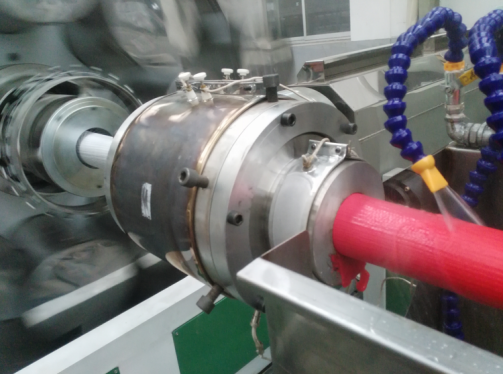
The agriculture industry doesn’t just benefit from the hoses themselves—production technologies like the PVC Lay‑Flat Hose Machine play a vital role in ensuring quality and availability of these irrigation components.
This type of machine specializes in producing lay‑flat hose using PVC and reinforcement materials. By controlling extrusion parameters and incorporating advanced plastic extrusion technologies, manufacturers can achieve precise thickness, durability, and resistance properties in PVC lay‑flat hoses.
Integrating PVC Lay‑Flat Hose Machine with broader plastic manufacturing processes allows for scalable production that meets diverse agricultural demands—whether for small farms or large irrigation networks.
While PVC Lay‑Flat Hose often replaces rigid piping in flexible irrigation systems, Plastic Pipe Machine generated products still play a crucial role where fixed infrastructure is needed, such as main distribution mains or permanent pivot systems. These pipes offer high structural integrity and are often used in conjunction with lay‑flat hoses in large irrigation networks.
Looking ahead, several trends are shaping how PVC Lay‑Flat Hose and related technologies are leveraged in agriculture:
Precision agriculture is evolving alongside digital sensors and irrigation controllers, making it possible to monitor soil moisture and adjust irrigation in real time. PVC lay‑flat hoses, with their flexible deployment, are ideally suited to support dynamic water routing based on sensor data.
Research into sustainable PVC formulations and recyclable materials is gaining traction. New material blends aim to reduce environmental impact while preserving the performance characteristics critical to irrigation.
As global water regulations tighten, irrigation systems that incorporate PVC lay‑flat hoses are receiving more attention because they support targeted delivery and reduced water loss—key metrics for efficiency mandates.
From flexibility and cost‑effectiveness to ease of use and environmental adaptability, the PVC Lay‑Flat Hose has become a cornerstone of agricultural irrigation and water management. Its advantages—lightweight design, excellent flow properties, and strong resistance to environmental challenges—make it a superior choice for modern farming operations. When combined with advanced production technologies like the PVC Lay‑Flat Hose Machine and integrated irrigation planning, farmers gain a powerful tool for optimizing water distribution, conserving resources, and improving crop outcomes.
As agriculture continues to evolve under water scarcity pressures and precision farming needs, PVC lay‑flat hoses are poised to play a central role in ensuring irrigation systems are both efficient and sustainable.
Most PVC lay‑flat hoses are made from flexible PVC reinforced with polyester yarn, providing durability and flexibility.
Yes — their adaptability and ease of routing make them suitable for integration with modern automated irrigation setups.
Due to their lightweight and flexible design, they conform to uneven ground without kinking, ensuring consistent water flow.
With proper maintenance and UV stabilization, many lay‑flat hoses last several years under continuous outdoor use.
PVC lay‑flat hoses are generally best suited for low to medium pressure applications; specialized models may handle higher pressures with appropriate reinforcement.


