


Views: 0 Author: Site Editor Publish Time: 2026-03-03 Origin: Site
When deciding between a PVC pipe machine and an HDPE pipe extrusion machine, it’s important to understand that the best choice depends on several factors, including the type of pipe you want to produce, the material you're working with, your target diameter range, and your expected production volume. This article will compare the key differences between the two types of extrusion machines, helping you determine which one is best suited for your needs.
The primary distinction between PVC pipe extrusion lines and HDPE pipe extrusion lines lies in the materials used for production. PVC (Polyvinyl Chloride) is a rigid plastic that is widely used for manufacturing pipes for water supply, drainage, and electrical conduit applications. HDPE (High-Density Polyethylene), on the other hand, is a more flexible material used for producing pipes that are typically used in pressure applications like water mains, gas distribution, and industrial fluid systems.
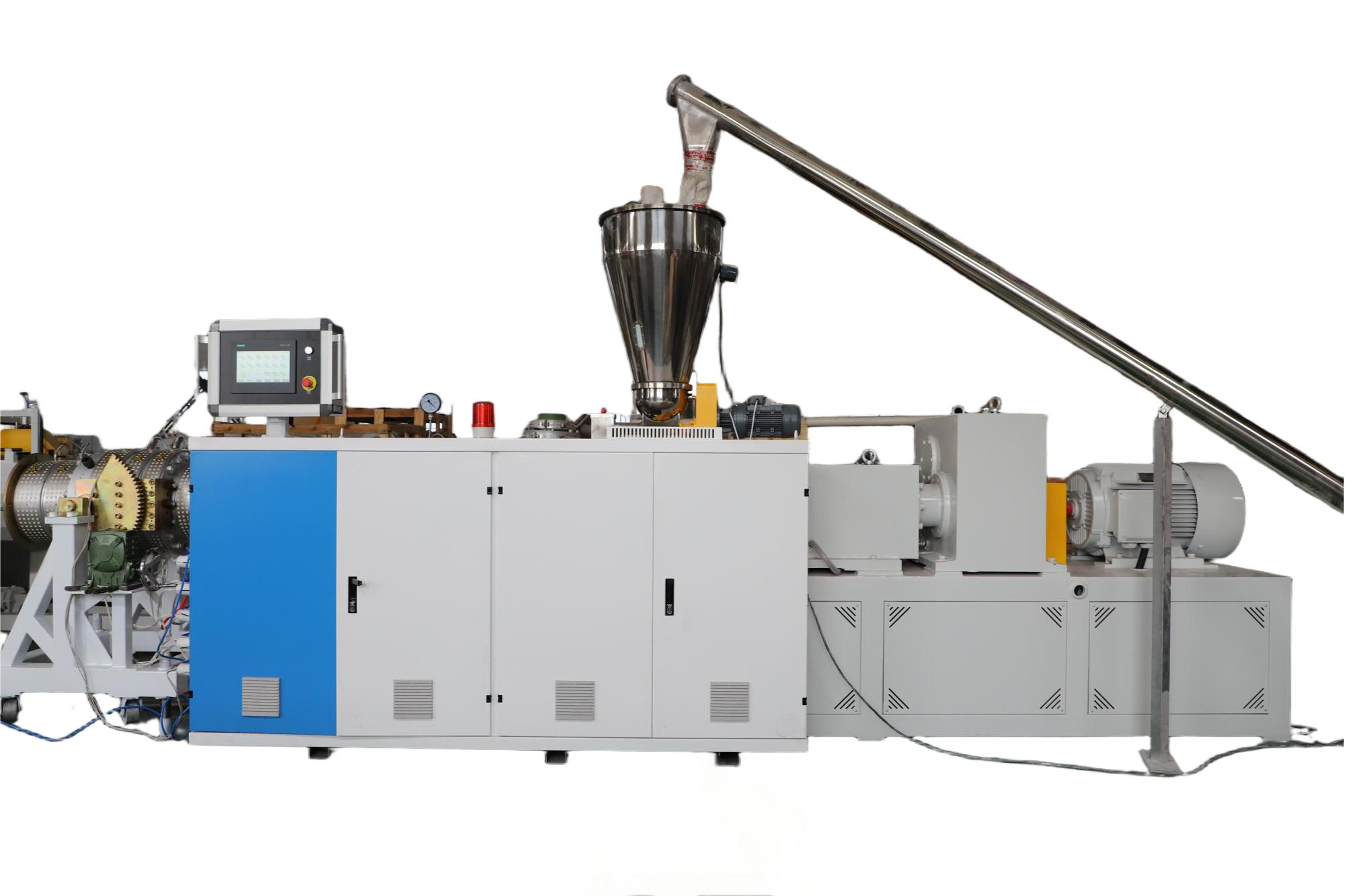
A PVC pipe machine is optimized for processing materials such as UPVC, CPVC, and PVC-UH. It is particularly suited for producing rigid pipes that require precise dimensional control. The conical twin-screw extruder design used in PVC pipe machines allows for consistent plasticizing and ensures the high quality of the end product.
An HDPE pipe extrusion machine is designed for high-density polyethylene, which is known for its flexibility and resistance to impact and chemicals. It is ideal for producing larger diameter pipes and for applications requiring high pressure, such as gas, water, and sewage systems.
The extruder type plays a significant role in determining the output quality and efficiency of the pipe extrusion process.
The PVC pipe machine typically uses a conical twin-screw extruder, which is ideal for processing PVC due to its ability to provide even melt temperatures, consistent output, and stability. The conical twin-screw design also allows for high-efficiency production with excellent material mixing.
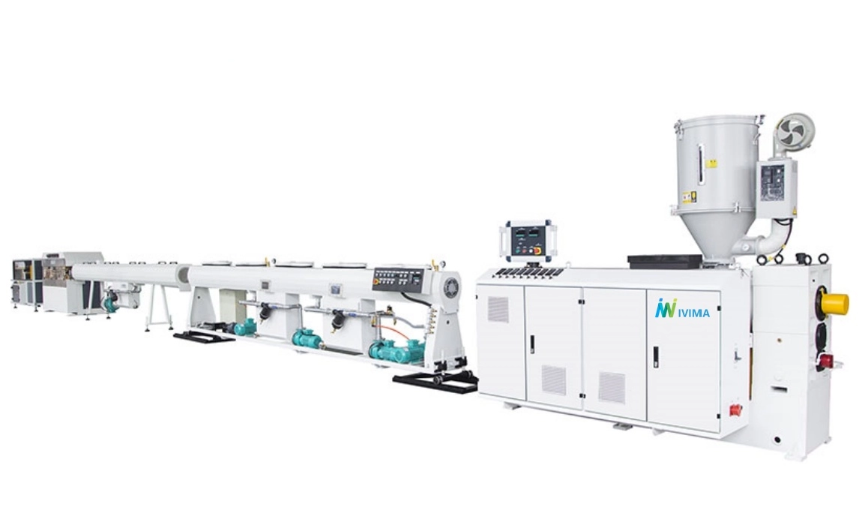
On the other hand, the HDPE pipe machine uses a single-screw extruder, which is best suited for processing polyethylene materials. Single-screw extruders have a longer length-to-diameter (L/D) ratio and are excellent at handling high-output production for large-diameter pipes, making them ideal for HDPE applications.
One of the key considerations when choosing between these two extrusion lines is the diameter range and output capacity.
| Feature | PVC Pipe Extrusion Machine | HDPE Pipe Extrusion Machine |
|---|---|---|
| Materials | UPVC / CPVC / PVC-UH | HDPE / PE |
| Extruder Type | Conical Twin-Screw | Single-Screw |
| Diameter Range | 16–800 mm | 16–1600 mm |
| Cavity Design | Single / Two / Four Cavity | Single Output Line |
| Typical Applications | Water supply, drainage, electrical conduit | Water mains, gas networks, irrigation, drainage |
| Power Range | 47–295 kW | 110–1067 kW |
| Output Capacity | Up to 300 kg/h | Up to 1500 kg/h |
The PVC pipe machine typically covers a diameter range of 16–800 mm, making it ideal for smaller to medium-sized pipes. It can accommodate different production needs, including single, two, and four-cavity designs. The line is perfect for applications such as water supply, drainage, and electrical conduit. The output capacity of PVC pipe lines typically ranges from 47 kW to 295 kW, with an average production rate of up to 300 kg/h depending on the specific configuration and diameter.
The HDPE pipe extrusion line covers a much broader range of diameters, typically from 16 mm to 1600 mm. This makes it suitable for producing large-diameter pipes used in applications like municipal water supply, gas distribution, and industrial piping. The HDPE pipe production line operates with a single-screw extruder and offers an output range from 110 kW to 1067 kW. The production capacity can go up to 1500 kg/h, depending on the diameter and the specific configuration.
The intended use of the pipe is another crucial factor in deciding between a PVC pipe machine and an HDPE pipe extrusion machine.
The PVC pipe extrusion line is ideal for producing rigid pipes that are commonly used in applications like water supply, drainage, and electrical conduits. These pipes are typically smaller in diameter, making them well-suited for residential and commercial plumbing, as well as electrical installations.
The HDPE pipe extrusion machine is primarily used for large-diameter pipes that are needed for high-pressure applications. These pipes are widely used in irrigation, gas distribution, and municipal water supply systems. HDPE pipes are also preferred for applications where flexibility and resistance to chemicals and UV degradation are essential.
Choosing the right pipe extrusion machine is not just about output capacity and material. The investment return is also a crucial factor.
The PVC pipe extrusion line is generally more cost-effective if you’re producing smaller diameter pipes for applications like electrical conduit and water supply. The ability to produce multiple pipes simultaneously (using multi-cavity molds) allows for increased productivity in a shorter time frame, which improves the overall return on investment.
The HDPE pipe extrusion machine, with its higher power requirements and greater diameter range, may have a higher initial cost, but it is designed for larger-scale projects and higher output. For companies focusing on large-diameter, high-pressure pipes for infrastructure projects, the investment in an HDPE line will pay off in the long term due to its ability to handle more demanding applications.
When choosing between a PVC pipe machine and an HDPE pipe extrusion machine, here are a few key factors to consider:
Material: Are you producing PVC or HDPE pipes?
Diameter Range: What size pipes do you need to produce most often?
Applications: Are you focusing on small-diameter, rigid pipes (PVC) or large-diameter, flexible pipes (HDPE)?
Power and Output: What is your expected output, and do you need the flexibility to scale production?
If your focus is on smaller, rigid pipes for plumbing, electrical, and drainage, the PVC pipe machine is the better option. However, if you’re looking to produce larger pipes for infrastructure, water mains, or gas systems, the HDPE pipe extrusion machine will better suit your needs.
There is no one-size-fits-all answer when it comes to choosing between a PVC pipe machine and an HDPE pipe extrusion machine. Your decision should be based on your material requirements, target applications, and the scale of your production. For smaller, rigid pipes, the PVC pipe extrusion line is an excellent choice. However, for larger, flexible pipes used in high-pressure applications, the HDPE pipe extrusion machine is the ideal option.
If you're unsure which line is best for you, it's essential to evaluate the specific requirements of your project and consult with IVIMA, an experienced manufacturer, to determine the best fit for your needs.


